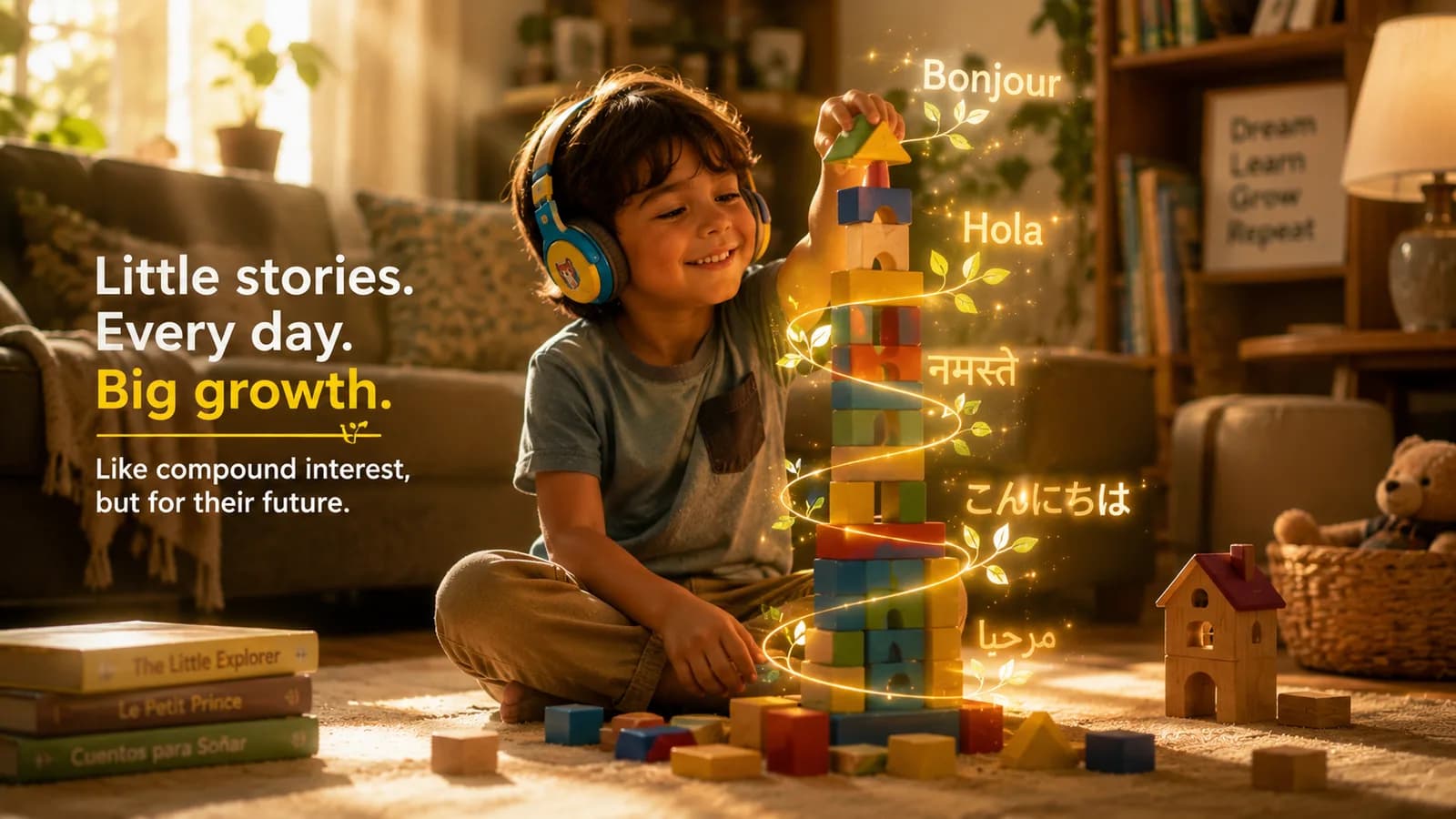
How to Make a Second Language Stick: 7 Habits for Multilingual Families
Ask any experienced financial advisor how to build lasting wealth and they will give you an answer that feels almost disappointingly mundane: not through one brilliant trade, not through a lucky windfall, but through the quiet, unglamorous magic of compound interest. Small amounts, invested consistently, over a long period of time. The mathematics are unforgiving in the best possible way — the returns are real, they accumulate, and eventually they become something that no single dramatic gesture could have produced.
Language acquisition works by exactly the same principle. And most families trying to raise bilingual children make exactly the same mistake that most people make with money: they go big, briefly, and then stop.
They buy the flashcard set, download four apps, schedule the intensive Saturday session, and attack Spanish or French with full commitment for approximately three weeks. Then life happens. The motivation fades. The language "leaks" from the child's memory because the human brain does not retain information delivered through sudden, high-intensity bursts — it retains information that arrives consistently, attached to daily experience, over months and years.
Making a second language stick in children is not about finding the right programme or the perfect curriculum. It is about building the right daily habits — small, sustainable, almost invisible habits that compound quietly into fluency. Here are the seven that matter most.
Why Language Leaks Without Daily Habits
Before introducing the habits, it helps to understand the mechanism by which language disappears — because understanding it makes the solution obvious.
The human brain operates on a principle of cognitive economy: the brain is more likely to strengthen and retain information that is encountered repeatedly over time. From the brain's perspective, a language your child hears intensively for two hours on Saturday and then not at all until the following Saturday is not an essential daily tool. It is an unusual weekend event. The brain files it accordingly.
This is why the "language bootcamp" approach produces such poor long-term results despite the effort involved. Intensity is not the variable the brain uses to decide what to keep. Frequency is. A child who hears ten minutes of French every day for ninety days is building a neurological case that French is a consistent feature of their daily life — something their brain needs to maintain in accessible storage. A child who has a two-hour French session once a week for twelve weeks is building no such case.
The seven habits below are all built around this principle. Each one is designed to be small enough to be genuinely sustainable and frequent enough to signal to the brain that this language is worth keeping.
Habit 1: Make It Daily, Not Weekly
The foundational habit — the one that everything else builds on — is the simplest and the most frequently ignored: expose your child to their target language every single day, even if only for ten to fifteen minutes.
James Clear, in Atomic Habits, describes habits as the compound interest of self-improvement: small investments that feel insignificant individually but accumulate into remarkable outcomes over time. The linguistics research supports this framing directly. A large body of educational research suggests that distributed practice generally supports better long-term retention than massed practice.
The practical implication is this: ten minutes of native-speaker French audio during the school run every weekday produces better language outcomes than a seventy-minute French session on Sunday afternoon. Not because the total exposure time is greater — it is roughly equivalent — but because the daily frequency signals to the brain that this language belongs in core memory rather than in the temporary file marked "things we do occasionally."
The first investment you make in your family language plan is non-negotiable daily exposure, however brief. Everything else in this list builds on that foundation.
Habit 2: Anchor Language to an Existing Routine
The most common reason families fail to maintain daily language exposure is not lack of motivation. It is the practical difficulty of finding a new slot in an already full day. The solution is not to find a new slot — it is to attach the language habit to a daily routine that already exists and happens automatically.
Behavioural scientists call this technique habit stacking: the deliberate attachment of a new behaviour to an existing, automatic one. The existing habit acts as a trigger that fires the new one without requiring a separate decision or remembered intention.
For language learning, this looks like: the school run becomes French audiobook time. Bath time becomes the Spanish song playlist. The meal preparation slot becomes ambient German narration through the kitchen speaker. Bedtime becomes the target-language story. None of these require finding new time. They require redirecting existing time that is already happening — and attaching high-quality language input to it.
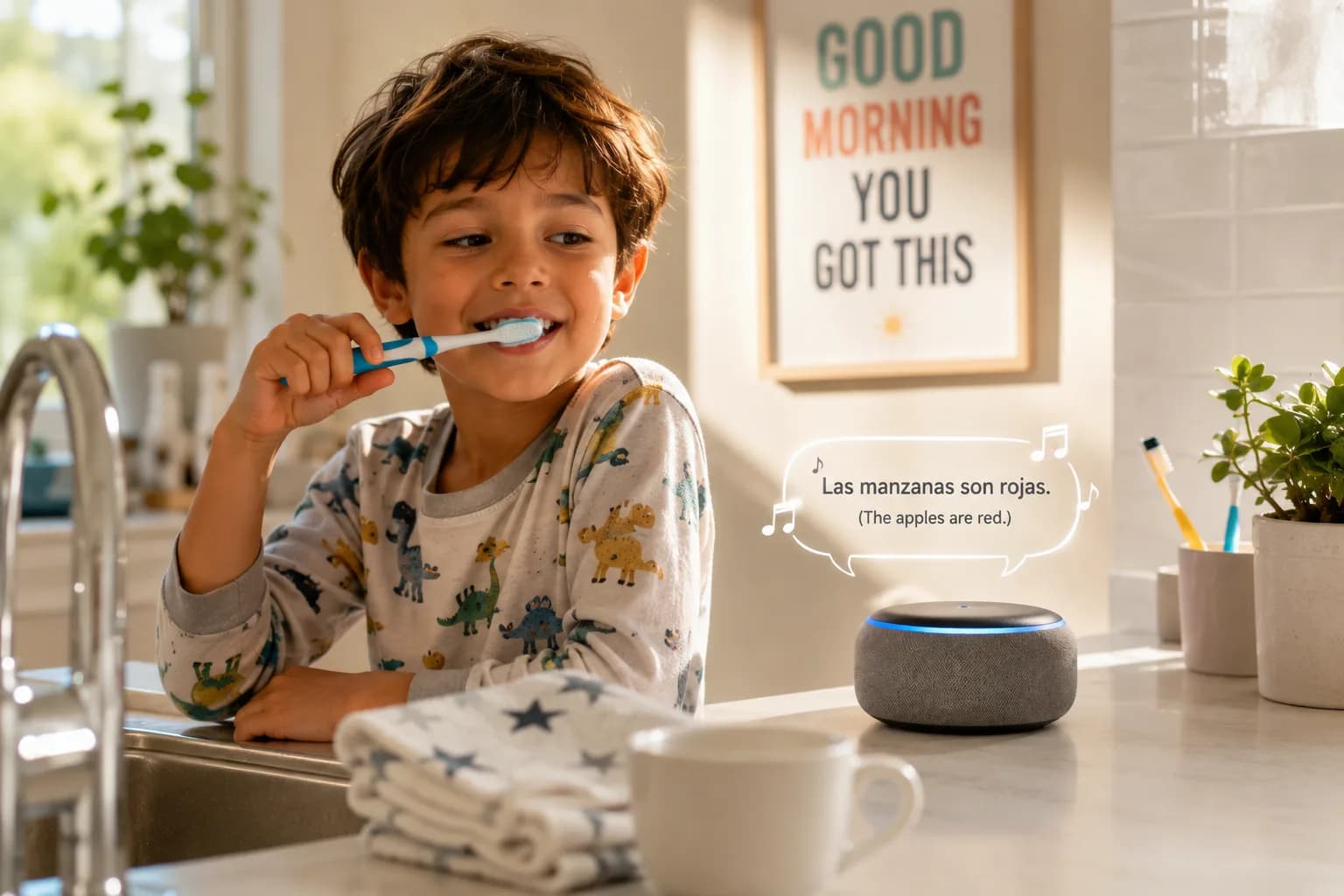
The car journey is particularly effective because it is captive, consistent, and low-stimulus relative to the home environment. A child in the back seat on the way to school has very little competing for their auditory attention. Fifteen minutes of native-speaker Cocoloops audio in this slot, five days a week, delivers over an hour of authentic language exposure by the end of the week — with no additional time investment from the family whatsoever.
Habit 3: Make It Story-Led, Not Drill-Led
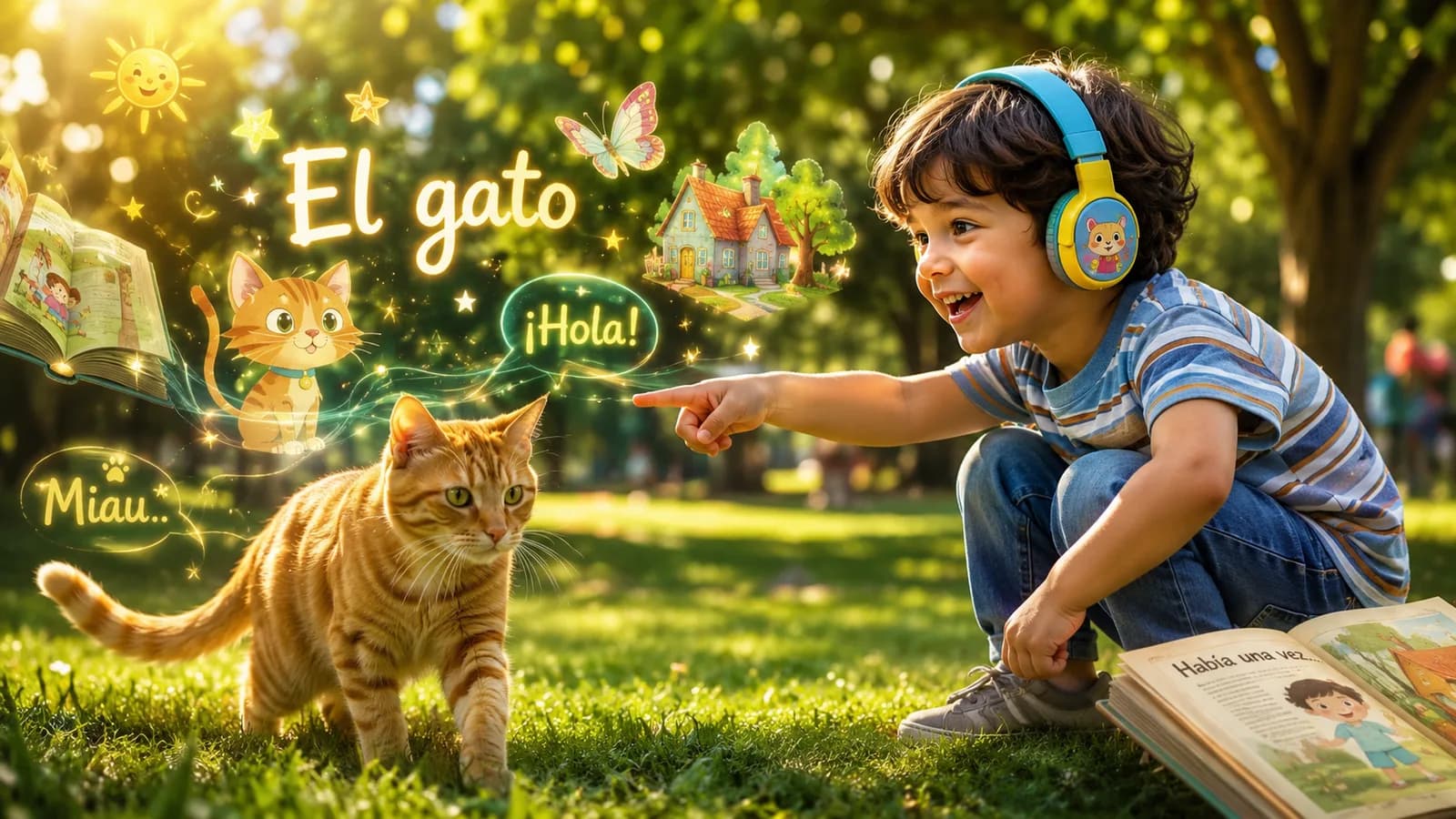
Flashcards feel productive. Language apps generate visible metrics — streaks, vocabulary counts, progress percentages. Worksheets produce a finished page with marks on it. All of these feel like learning, and almost none of them produce the depth of retention that story-based exposure delivers for young children.
Research generally supports vocabulary learned in a narrative context — attached to characters, emotional outcomes, and story events — is retained significantly more durably than vocabulary encountered in isolation. The brain's memory systems are narratives that provides meaningful context that supports memory and comprehension. Information that arrives as part of a story is tagged with emotional, contextual, and sequential markers that make it substantially easier to retrieve than information that arrives as an isolated label.
For children especially, the mechanism is unusually powerful: they are not trying to learn vocabulary when they listen to a story. They are trying to find out what happens next. The language acquisition is a byproduct of narrative engagement, which means the child's cognitive resources are not divided between the effort of memorising and the effort of following a plot — following the plot is the method through which the vocabulary is acquired.
This is why story-led audio immersion often produces stronger long-term retention drill-based apps for long-term language retention in young children. The investment vehicle is simply more efficient.
Habit 4: Celebrate Every Milestone, Not Just Fluency
In a long-term investment strategy, you do not wait until you have built a million pounds before acknowledging that your approach is working. You track the growth. You notice the dividends. You feel the progress accumulating in real time — and that feeling sustains the commitment through the periods when the returns feel slow.
Language learning requires the same approach. Waiting for your child to produce a grammatically perfect sentence before offering genuine recognition is waiting for a milestone that may be years away. The motivation available from celebrating small, consistent wins is irreplaceable.
Notice and genuinely celebrate the moment your child hums a French melody. The first "gracias" that appears at the dinner table without prompting. The day they correct your pronunciation with delight. The morning they ask, unprompted, to hear the Spanish story again. These micro-milestones are the dividends of your daily language investment — and celebrating them builds the intrinsic motivation that will sustain the habit through the years when visible progress slows.
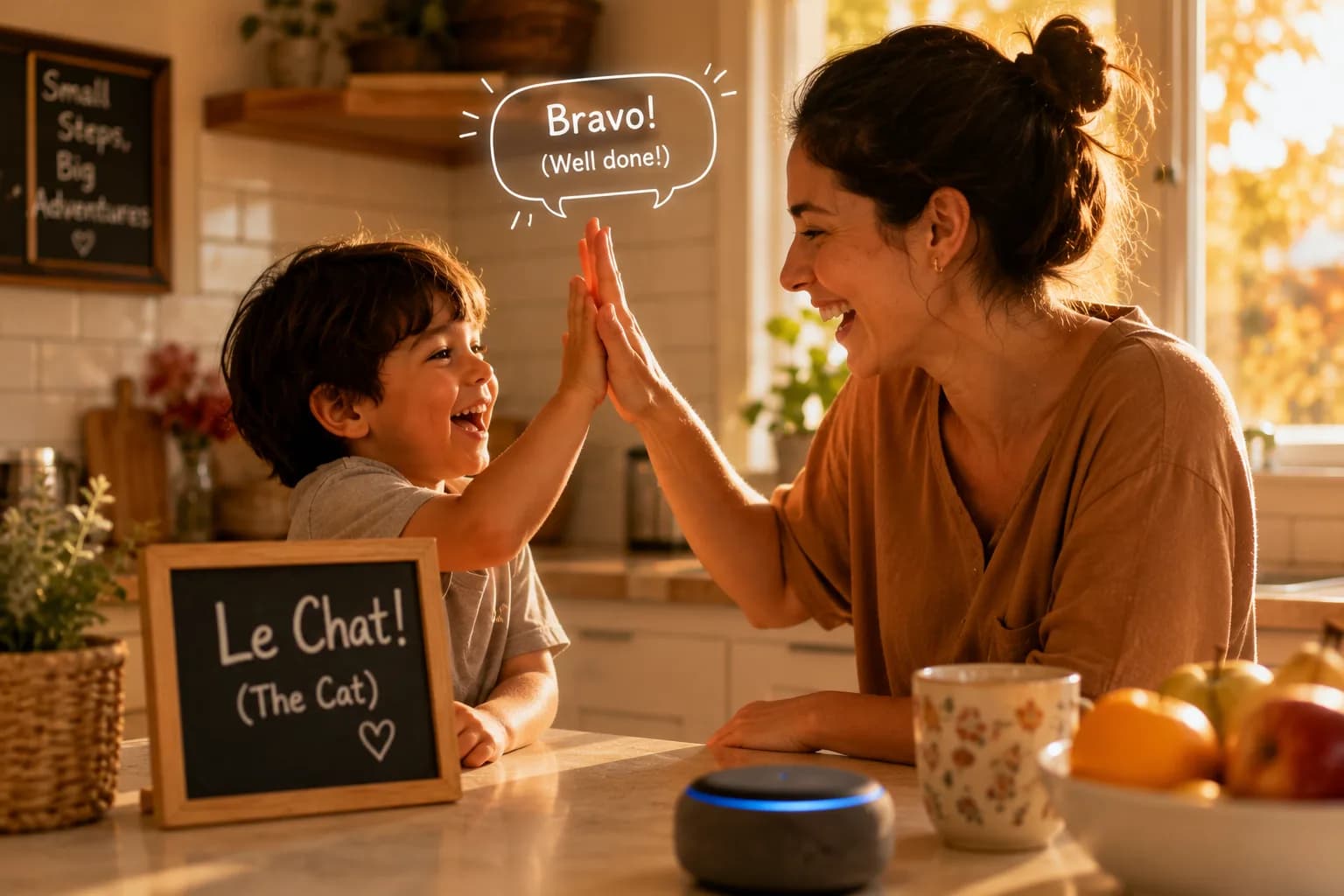
Intrinsic motivation — the kind that comes from genuine pride, enjoyment, and a felt sense of growing competence — is the Intrinsic motivation is one of the strongest drivers of long-term language learning. External pressure, performance anxiety, and the feeling of being made to do something difficult produces resistance. Celebration produces investment.
Habit 5: Build a Language Identity
Children often begin to act in ways that are consistent with the identities they repeatedly hear reinforced. they have been given. A child who has been told, over time and through experience, that they are "a Spanish speaker" will orient their behaviour around that identity in a way that no external instruction can produce. The language becomes not something they are supposed to do — it becomes part of who they are.
Build this identity deliberately and consistently. Use language that frames their bilingual development as a capability they own: "You are our little Spanish speaker," rather than "We are trying to teach you Spanish." Fill their world with multilingual heroes — stories in which characters move fluently between languages and cultures as a natural feature of their lives. When they hear a word in Spanish and recognise it, respond with genuine impressed acknowledgement: "You knew that. That is your Spanish coming out."
Cultural pride amplifies this identity formation. A child who understands that their heritage language connects them to a history, a family, and a cultural world that has its own beauty and significance is a child who has a reason to maintain that language that goes deeper than any parental instruction. The language becomes an expression of who they are, not a task they are being asked to complete.
Habit 6: Use Audio to Fill the Exposure Gaps
Most families raising children in a second language face a version of the same practical problem: the parent does not speak the target language, or does not speak it fluently enough to provide sustained, accurate native-speaker input. This creates a daily exposure gap that feels difficult to fill without external help.
The financial equivalent is automating your investments. You set up the direct debit once, and the contribution happens every day without requiring a fresh decision or a new effort. High-quality native-speaker audio content automates the language exposure in exactly this way.
Cocoloops functions as the automated daily language investment for families who cannot provide native-speaker input themselves. A Cocoloops story plays during the school run — and your child receives fifteen minutes of authentic French prosody, native-speaker vocabulary, and contextualised language input without you needing to produce a single French word. The story plays at bedtime — and the brain receives high-quality language input making bedtime a calm, consistent opportunity for language exposure. The parent's role is not to be the teacher. It is to press play and let the compound interest accumulate.
Habit 7: Review and Remix Earlier Stories
One of the most counterintuitive principles in long-term investment is that you should not constantly be chasing new opportunities. You should let your existing investments grow. The returns compound most powerfully when you stay in the same position over time rather than constantly rotating out in search of something new.
Language learning follows the same logic. Returning to a favourite Cocoloops story from three months ago — one your child knows well and loved — is not regression. It is deep consolidation. Because they already know the plot and the characters, the brain relaxes its focus on narrative comprehension and allows children to notice vocabulary and language patterns they may have missed before: grammatical structures, subtle vocabulary choices, the precise way a native speaker handles a particular phrase. Children who re-listen to familiar stories consistently pick up vocabulary and grammar on the fifth and sixth listen that their brain entirely filtered out on the first two.
The habit of returning to earlier content also builds linguistic confidence — the sense of fluency and ease that comes from genuinely knowing a language well rather than always operating at the edge of comprehension. This confidence is itself a motivator that sustains the daily habit.
Building Your Family Language Plan
The seven habits above work most effectively when they are organised into a simple, explicit family language plan — a single document that makes the commitment concrete and keeps everyone aligned. Here is a template you can fill in tonight and stick to the fridge.
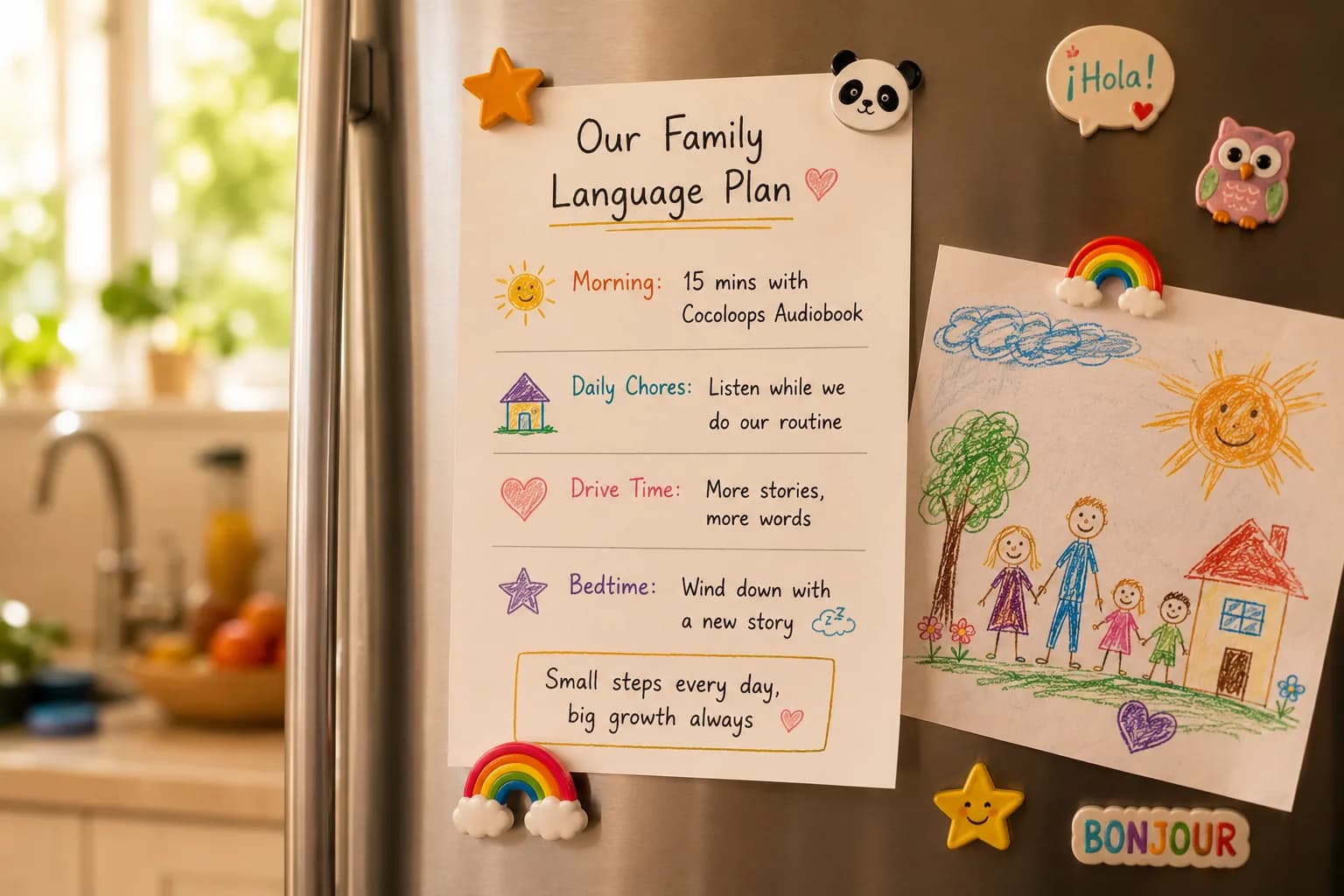
- The target language: Which language are we building? (Spanish / French / German / Italian / Hindi)
- The daily minimum: How many minutes per day are we committing to? (Recommended starting point: 15 minutes)
- The anchor habit: Which existing daily routine will carry the language? (The school run / bedtime / meal preparation / bath time)
- The input tool: What provides the native-speaker audio? (Cocoloops — which stories, which language setting)
- The story rotation: Three stories in the library right now, to rotate across the week. (Choose by genre or theme your child is currently interested in)
- The celebration milestone: What will we do as a family when we hit 30 consecutive days of daily listening? (Cook a meal from the target language culture / video call a family member who speaks the language / choose a new story collection together)
- The review schedule: Which story from the last three months do we return to this week?
Print this. Put it somewhere visible. Review it monthly and adjust what needs adjusting. This is your family's language investment plan — and the returns, compounded daily over months and years, will be extraordinary.
Conclusion: Small Daily Habits, Extraordinary Long-Term Returns
Making a second language stick in children does not require an expensive tutor, a rigorous curriculum, or a parent who speaks the language fluently. It requires what all compound growth requires: small, consistent, daily investments sustained over time, with enough patience to let the returns accumulate without forcing them.
Fifteen minutes of native-speaker audio today. And tomorrow. And the day after. That is the investment. The return is giving your child the best possible opportunity to grow up comfortable using two languages. — because they did.
Start your family's daily language habit with a Cocoloops story tonight →
Frequently Asked Questions
How long does it take for a second language to genuinely "stick" in a child using daily habits?
The timeline varies considerably by age, daily exposure time, and the proximity of the target language to English, but a useful framework is this: the first one to three months typically involve a silent period — active absorption without visible production. Between months three and six, most children begin dropping target-language words into English sentences spontaneously and recognising familiar vocabulary in new contexts. Between six months and a year of consistent daily exposure, genuine comprehension of familiar narrative content in the target language becomes reliable. Full conversational fluency requires years of sustained exposure, but the milestones along the way — and the visible accumulation of vocabulary and recognition — are consistent and motivating throughout.
What if we miss a day or two of the daily habit? Does it reset our progress?
No — and the anxiety about missing individual days is itself one of the most common reasons families abandon language habits entirely. Missing one or two days does not erase the neural consolidation that has already occurred. The brain does not delete vocabulary simply because a day of input is missed. What matters is the overall pattern across weeks and months, not perfect daily compliance. If you miss two days, return on the third without guilt or ceremony. The compound interest metaphor is useful here: missing one contribution does not collapse the investment. It simply means that contribution is not made. The existing balance remains and continues to grow.
My partner is not engaged with the language habit. How do I make it a family effort?
Start with the habits that require the least from your partner — specifically, ambient audio during routines they are already part of. A Cocoloops story playing during the family breakfast or the shared car journey requires nothing from your partner beyond tolerance of the audio. Once the child begins producing target-language words spontaneously — which typically happens between months three and six — the engagement of resistant partners almost always increases dramatically. Hearing their child use French words at the dinner table is more motivating than any theoretical argument about bilingualism's benefits. Start the habit yourself. Let the results make the case.
Should we use the same Cocoloops stories every day, or introduce new ones regularly?
Both, in a deliberate rotation. The research on language retention supports a mix of repeated familiar content and new narrative input. Returning to favourite stories builds deep consolidation — each re-listen surfaces vocabulary and grammar that the brain filtered out in earlier listens. Introducing new stories maintains engagement and exposes the child to broader vocabulary and narrative structures. A practical rotation is to spend two to three weeks with a story before introducing a new one, then return to the earlier story periodically as a "remix" listen. This mirrors the structure of effective spaced repetition — the learning principle that produces the most durable long-term retention.
Is fifteen minutes per day really enough to build genuine bilingual fluency in a child?
Fifteen minutes of daily high-quality native-speaker audio is a realistic and sustainable starting point — not a ceiling. It is significantly more effective than the same total time delivered once weekly, because the daily frequency signals to the brain that the language is an everyday necessity worth maintaining in permanent storage. Over time, as the habit becomes established and your child's engagement deepens, the listening time will often extend naturally because the child asks to continue. Fifteen minutes is the minimum investment that produces compound returns. Most families find that within two to three months, their children are requesting more — which is the most reliable sign that the habit is taking root.
Related reading:
Tags
Related Posts
All posts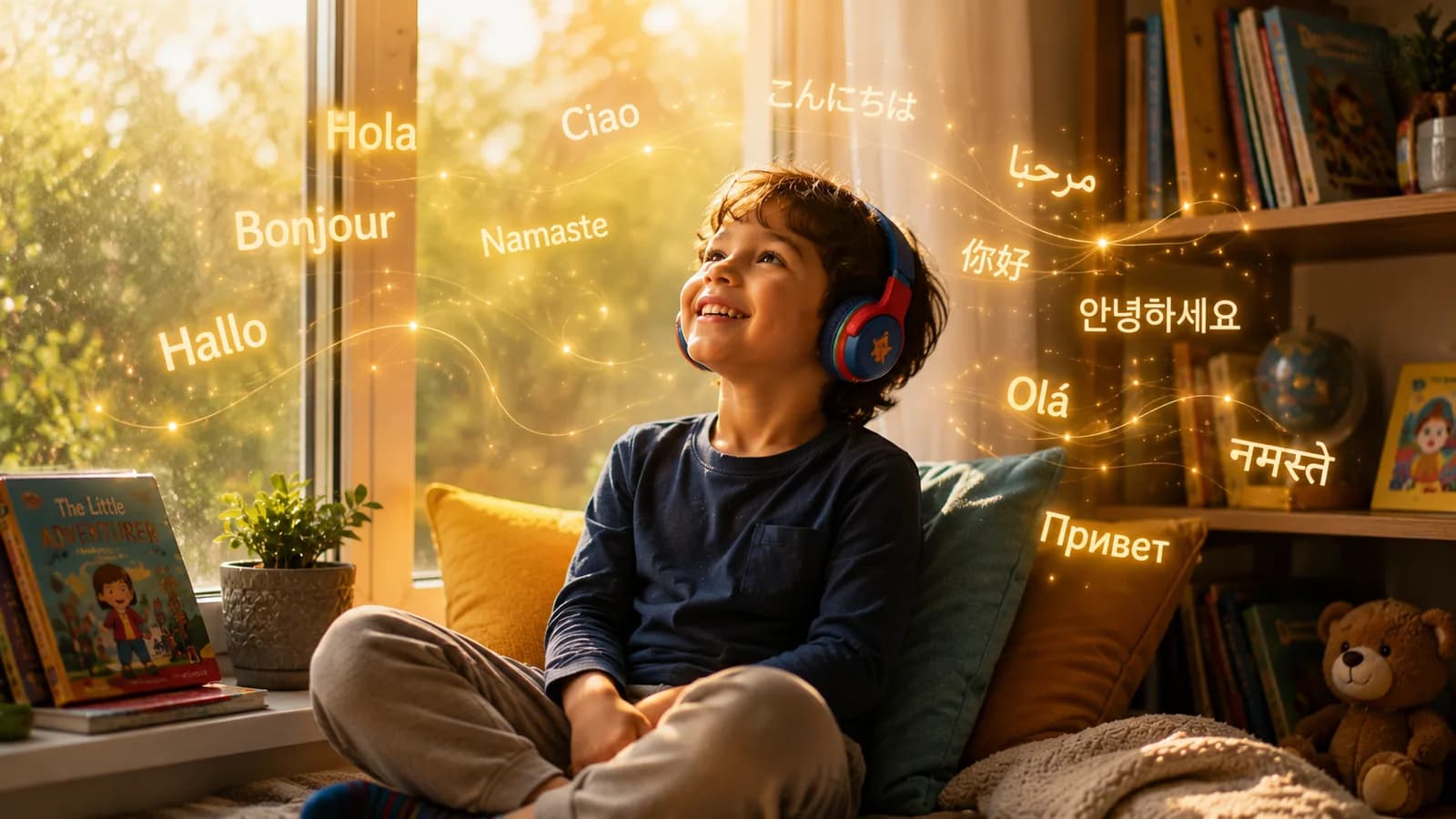

Newsletter
Get new stories & tips in your inbox
Parenting tips, audiobook picks, language learning — weekly.
