What Is OPOL? The One Parent, One Language Method Explained
What Does OPOL Mean?
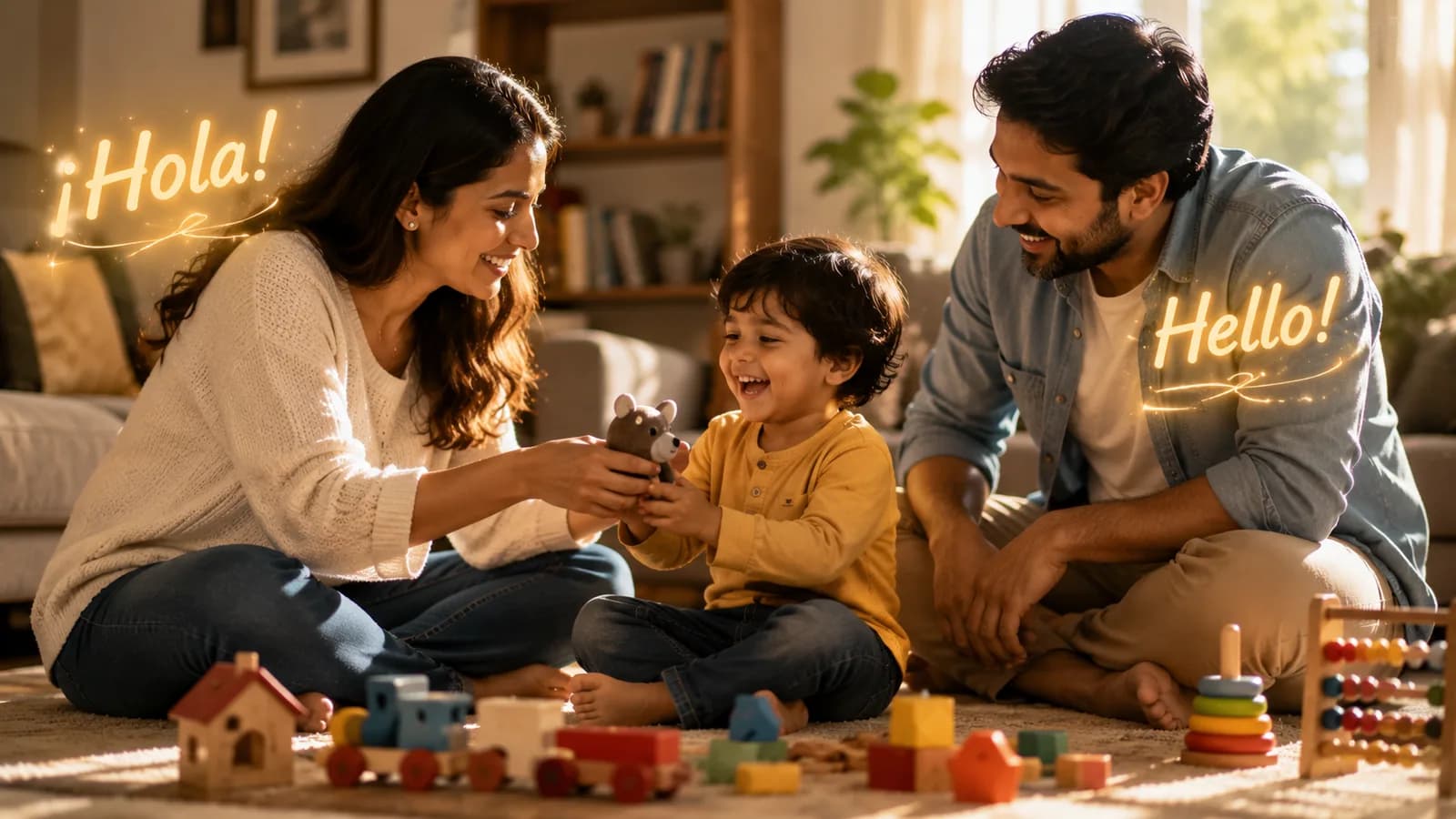
OPOL stands for "One Parent, One Language." It is a bilingual parenting method in which each parent consistently speaks a different language to their child — for example, one parent always speaks Spanish and the other always speaks English — so that each language stays reliably attached to one person. It is sometimes written as one person, one language, and in Spanish-language sources as el método OPOL.
If you have spent even ten minutes researching how to raise a bilingual child, you have almost certainly met the OPOL method. It is the most famous and most hotly debated bilingual parenting strategy in the world. And it began, like many good ideas, with an anxious parent and a letter to a friend.
In 1908, the French linguist Jules Ronjat and his German wife welcomed a baby boy, Louis. The couple wanted to raise him speaking both of their languages — and Ronjat, professional linguist or not, wasn't sure how. So he wrote to his friend and colleague Maurice Grammont, who had introduced a deceptively simple idea a few years earlier in his 1902 book Observations sur le langage des enfants: une personne, une langue. One person, one language.
Grammont's reply ran to barely ten lines. Nothing needs to be taught, he wrote. Simply make sure each language is always represented by one person — you always speak French to him, his mother always German — and never reverse the roles. Ronjat followed the advice to the letter, meticulously documented Louis's language development for almost five years, and published his findings in 1913. Louis grew up comfortably bilingual, and Grammont's ten-line letter went on to become the most influential piece of bilingual parenting advice ever written. Today, it is known worldwide as the OPOL Method (One Parent, One Language).
But here is the detail most retellings leave out: little Louis mixed his languages. In his early years he regularly dropped German words into his French sentences — and it did him no harm whatsoever. His two vocabularies sorted themselves out as his exposure to each language grew. Hold on to that detail, because more than a century later, it answers the very first fear most parents feel.
Take Maria, a Spanish tutor in Madrid. Not long ago, an expat couple brought her their young son — a bright Anglo-Indian boy growing up with English and Hindi at home — hoping to add Spanish to the mix. But before the first lesson even began, they asked her the question every language teacher eventually hears: he already jumbles his two languages in a single sentence — are we confusing him? Won't a third language make it worse?
Maria could reassure them with over a century of evidence behind her. Their son wasn't confused, and he certainly wasn't damaged. He was doing exactly what bilingual children everywhere do — using every word he has, from every language he knows — just as little Louis did over a hundred years ago. What he needed wasn't a cure. It was structure: clear, consistent exposure to each of his languages. Which is precisely the need the OPOL method was designed to meet.
But does the method actually hold up in the chaotic reality of modern families? And more importantly — what if neither parent speaks the language you want your child to learn?
The Research: Does OPOL Actually Work?
If you ask a linguist whether the OPOL method works, the short answer is yes — it can, and it has for countless families. The honest, research-backed answer is more interesting: OPOL works, but it is not the strategy itself that does the heavy lifting.
Because the approach has been documented since 1913, linguists have had over a century of data to work with. Researchers like Suzanne Barron-Hauwaert and Susanne Döpke have spent years tracking OPOL families around the world. Döpke's interactional research found that simply speaking the language in the same room as the child isn't enough — the system thrives when the child gets rich, turn-by-turn conversational contact in each language. Barron-Hauwaert's work adds a warning for the long haul: as children enter the formal school system, parents often struggle to hold the strict OPOL boundaries, drifting toward a more mixed pattern just to keep up with homework and school friends.
Making Every Exchange Count
What Döpke's finding means in practice is that passive listening alone will not get you there. A radio murmuring in the background, or a parent narrating at a child who is never expected to answer, builds comprehension but not production — and the pathways behind active speech are laid down by producing the language, not merely receiving it. Rich input is the raw material; interaction is what converts it into speech. Which makes the most valuable habit an OPOL parent can develop a simple one: pull your child into the conversation rather than performing it for them.
The most useful tool for this is the gentle feigned misunderstanding. When your child answers you in the community language, resist the reflex to simply accept it and move on. Tilt your head, ask them to say it again, or ask for clarification in your target language. You are not correcting them or withholding warmth — you are quietly making the conversation happen in the target language. Pair that with open-ended questions, which do far more work than they appear to. "Did you have a good day?" invites a single syllable and closes the exchange; "why do you think she did that?" or "what happens next?" obliges your child to assemble a whole sentence in order to answer. And when you read together, treat the book as a script for conversation rather than a monologue: stop halfway to ask them to predict the ending, or to describe in their own words what they can see on the page. The story stops being something delivered to them and becomes something they help build.
Holding the Line Once School Starts
Barron-Hauwaert's school-age drift calls for a different kind of defence — not more willpower, but better structure, decided in advance while you still have the energy to decide anything. The most reliable of these is what you might call a language island: a small, protected pocket of the day that belongs to the minority language and is simply never up for negotiation. Mealtimes, the walk or drive to school, the half hour before lights-out. Because the boundary is anchored to a time of day rather than to your mood, it survives the evenings when you have nothing left to give it.
Homework is where most boundaries collapse, and it is worth planning for honestly: you cannot realistically coach a child through fractions in a language their textbook doesn't use. The fix isn't to refuse, but to make the switch visible and finite. Move to a different table, or simply announce it — "we're switching to English for twenty minutes to finish this maths, then we're switching back." A switch that is named and time-boxed is a detour. An unnamed one quietly becomes the new route. Then look at what your child does for fun, because streaming profiles, video games, and the books within arm's reach on the shelf are all quietly set to a language, and by default that language is the school's. Resetting them to the minority language costs you one afternoon of admin and buys back hours of exposure every week without a single argument.
Finally, there is the one thing no amount of parental discipline can substitute for: other people. Seek out playdates with families who share the language, heritage-language classes, holiday camps — anything that puts your child in a room where the language is unremarkable. A child who only ever hears a language from one parent will eventually conclude that it is that parent's private rule rather than a real language belonging to real people. Hearing it come out of another seven-year-old's mouth settles that question in a way you never could.
The Bigger Picture: Input Beats Strategy
The most important reality check, though, comes from linguist Annick De Houwer. In a landmark 2007 study, she analysed data from nearly 2,000 bilingual families and found that roughly one in four children raised with OPOL did not end up actively speaking the minority language. Strict OPOL families didn't do meaningfully better than families where both parents spoke both languages. And the highest success rates of all belonged to families where the minority language dominated the home. Her conclusion has become famous in the field: OPOL is "neither a necessary nor a sufficient condition" for raising a bilingual child.
That sounds like bad news for OPOL. It isn't. It is a clarification — and a liberating one. What actually predicts success is not the elegance of your strategy, but the quantity and consistency of exposure the minority language receives. OPOL works when it delivers lots of consistent input. It breaks down when the "minority language" — the one not spoken at school, in the community, or on the playground — simply doesn't get enough airtime. If the parent assigned to it travels for work, or the child spends most of their waking day in a majority language-speaking day-care, the child's brain will default to the majority language. It is a matter of pure neurological efficiency.
In short: OPOL is a delivery vehicle, not a magic wand. The fuel is daily, intentional input — wherever it comes from.
OPOL in Practice: The Common Challenges
It sounds so elegant on paper: you speak Spanish, I'll speak English, we meet in the middle. But in the chaotic, sleep-deprived reality of modern parenting, strictly enforcing OPOL can feel like a part-time job. If you are attempting this method, prepare for a few incredibly common hurdles. Knowing they are coming is half the battle.
1. Consistency Fatigue
At the end of a long Tuesday, when dinner is ready and you just need your toddler to come to the dinner table, translating your desperate pleas into your designated second language takes serious mental energy. Parents often slip back into their dominant language simply to get things done. Once that boundary blurs, it becomes harder to re-establish.
2. Public Embarrassment
It can feel profoundly awkward to be the only parent at a crowded playground speaking loudly to your child in a foreign language. Many parents quietly switch to the community language in public — which drastically reduces the child's exposure hours.
3. Grandparent and Family Pushback
Extended family members who only speak the majority language often feel left out. A well-meaning grandparent might worry the child won't be able to communicate with them, or feel alienated at family dinners. Navigating these dynamics takes patience and gentle boundaries.
4. Child Resistance
This is the hurdle that breaks most parents. There will almost certainly come a phase where your child perfectly understands your chosen language but stubbornly replies in the majority language (or the community language). It is completely normal — and completely demoralising for the parent putting in the effort.
OPOL + Audio: A Modern Hybrid Approach
If you read through those challenges and felt a wave of exhaustion, you aren't alone. And here lies the biggest gap in traditional OPOL advice: it assumes one parent is already a fluent, highly available native speaker of the target language.
What if you and your partner only speak English, but you want your child to learn French, German, or your grandparents' heritage language? What if the parent assigned to the minority language works late, travels often, or simply needs a break on a Saturday morning?
This is where the century-old method needs a modern update — and where the research points the way. Remember De Houwer's finding: what matters most is the quantity and consistency of minority-language input, not which person delivers it. So when a parent cannot realistically be the sole source of the language, you bring in a "Third Voice."
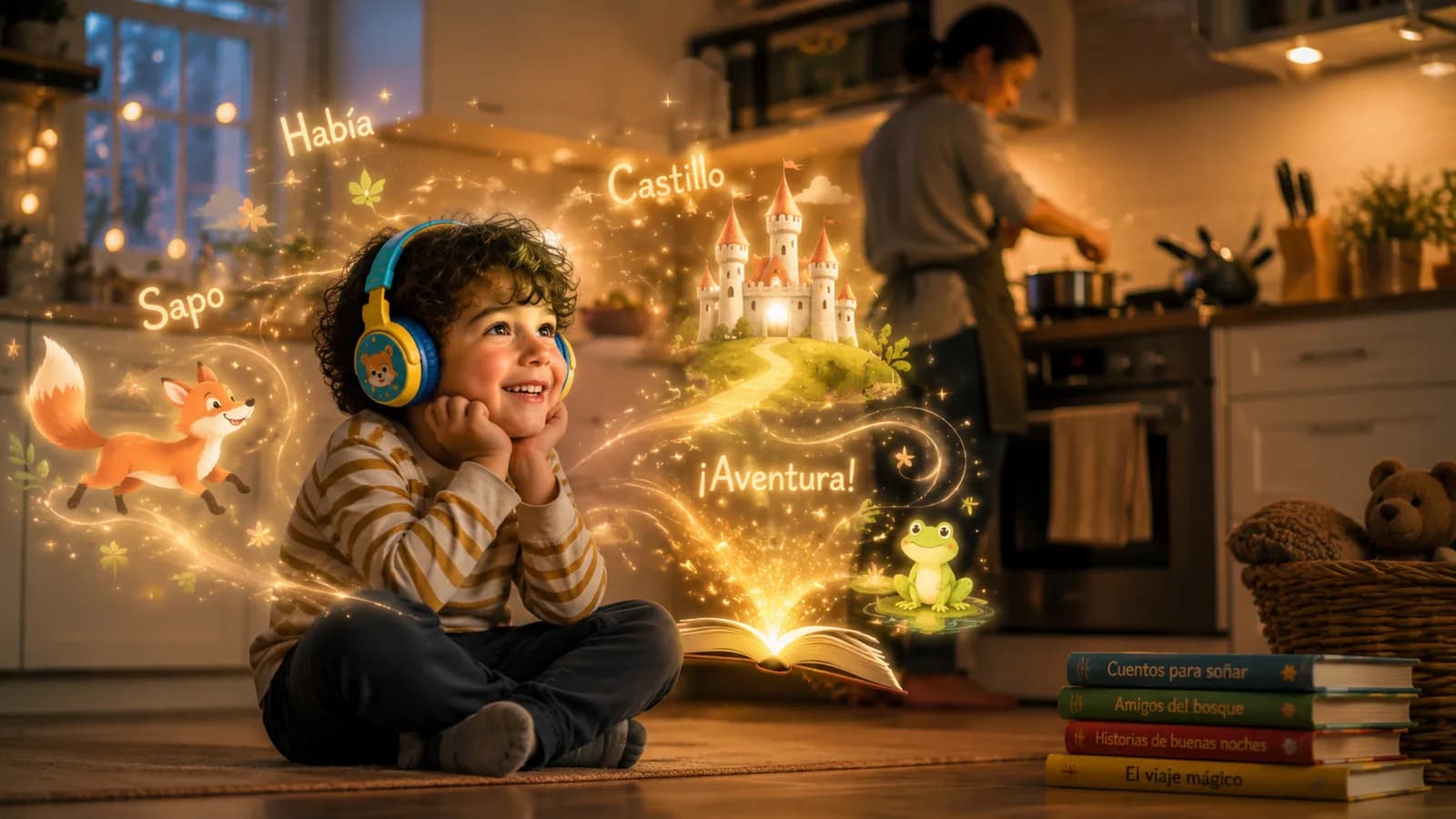
High-quality audiobooks provide the native-speaker pronunciation, natural phrasing, and rich grammatical structure that monolingual or exhausted parents simply cannot supply on their own. This is exactly where a platform like Cocoloops becomes a game-changer. Cocoloops acts as that dedicated, unwavering "person" in the OPOL equation — a consistent, reliable, highly engaging stream of the minority language. You don't have to speak a single word of Italian or French; you just have to press play and let immersive audio stories do the heavy lifting of language modelling.
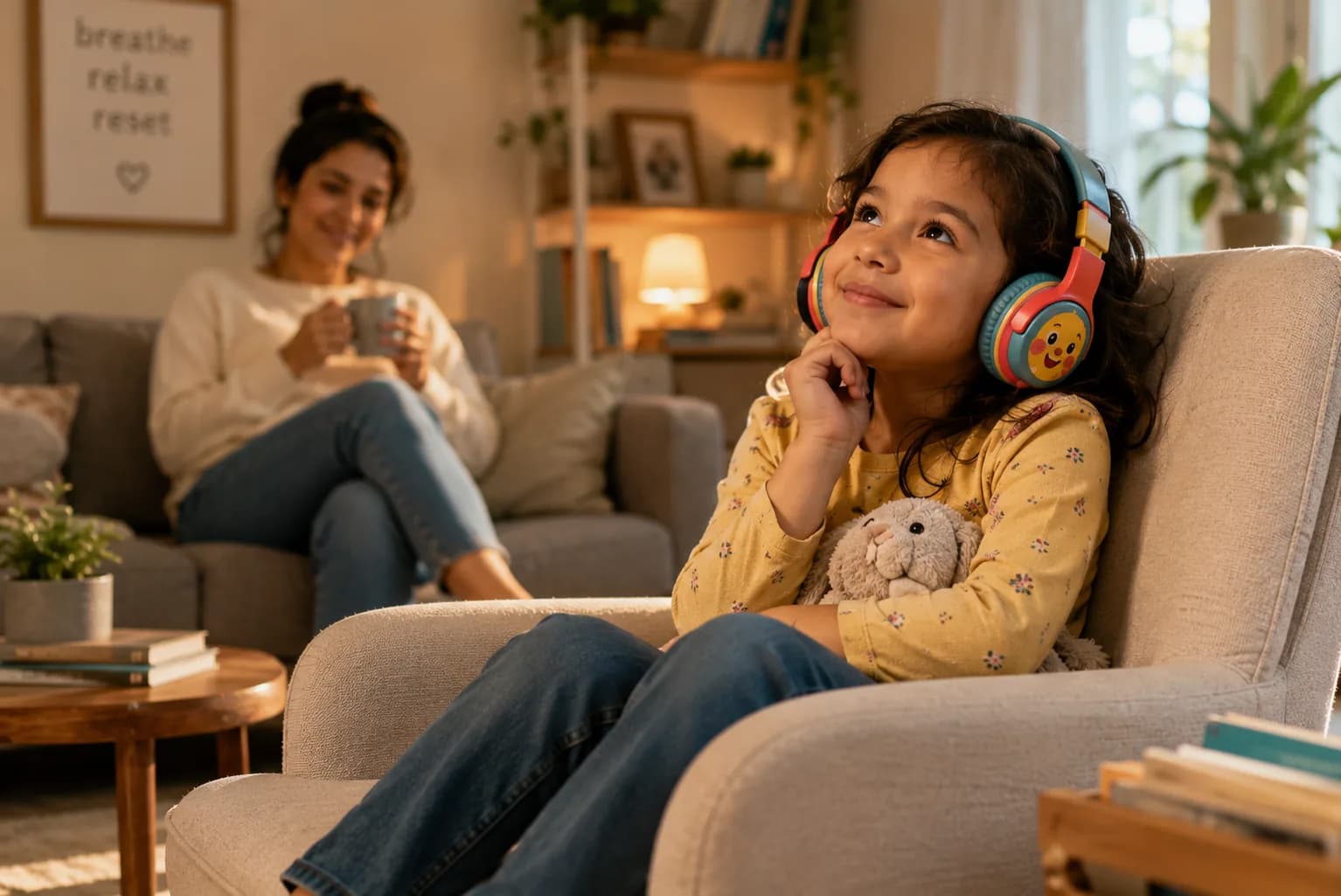
And when your child listens to the same story in their native language and then in the target language, their brain actively maps the vocabulary from one to the other. The audio becomes the uncompromising OPOL partner you never knew you needed.
OPOL vs. Time & Place vs. Minority Language at Home
OPOL isn't the only way to raise a bilingual child. Depending on your living situation and fluency, another method might save your sanity — and, as the research above suggests, might even work better. Here is an honest look at the three heavyweights of bilingual parenting:
| Strategy | How It Works | Who It Works Best For |
|---|---|---|
| OPOL (One Parent, One Language) | Parent A speaks Language 1; Parent B speaks Language 2. | Families where parents have different native tongues. It creates a deep emotional bond between a parent and their language. |
| Time & Place | Language is dictated by context (e.g., "we only speak Spanish at the dinner table and on weekends"). | Families where both parents are bilingual but want the community language as the household default. Less rigid than OPOL. |
| mL@H (Minority Language at Home) | The home is a linguistic sanctuary (e.g., 100% Spanish indoors, English outside). | Immigrant and heritage families. In De Houwer's research, this pattern produced the highest rates of active bilingualism, because the minority language receives massive daily reinforcement. |
If you are a monolingual parent using audio as your "third voice," you are essentially creating a modified Time & Place strategy: "when the headphones go on, or when we get in the car, we are in French story time."
Tips to Make OPOL Sustainable Long-Term
If you are committed to the OPOL route — or the OPOL + Audio hybrid — you have to pace yourself. Raising a bilingual child is a marathon, not a sprint.
Set Daily Minimums, Not Perfection
Do not aim for 100% target-language conversations every day; you will burn out within a month. Instead, aim for a non-negotiable minimum of 15 to 20 minutes of dedicated, high-quality exposure. If you hit that baseline, the day is a success.
Use Audio on Low-Energy Days
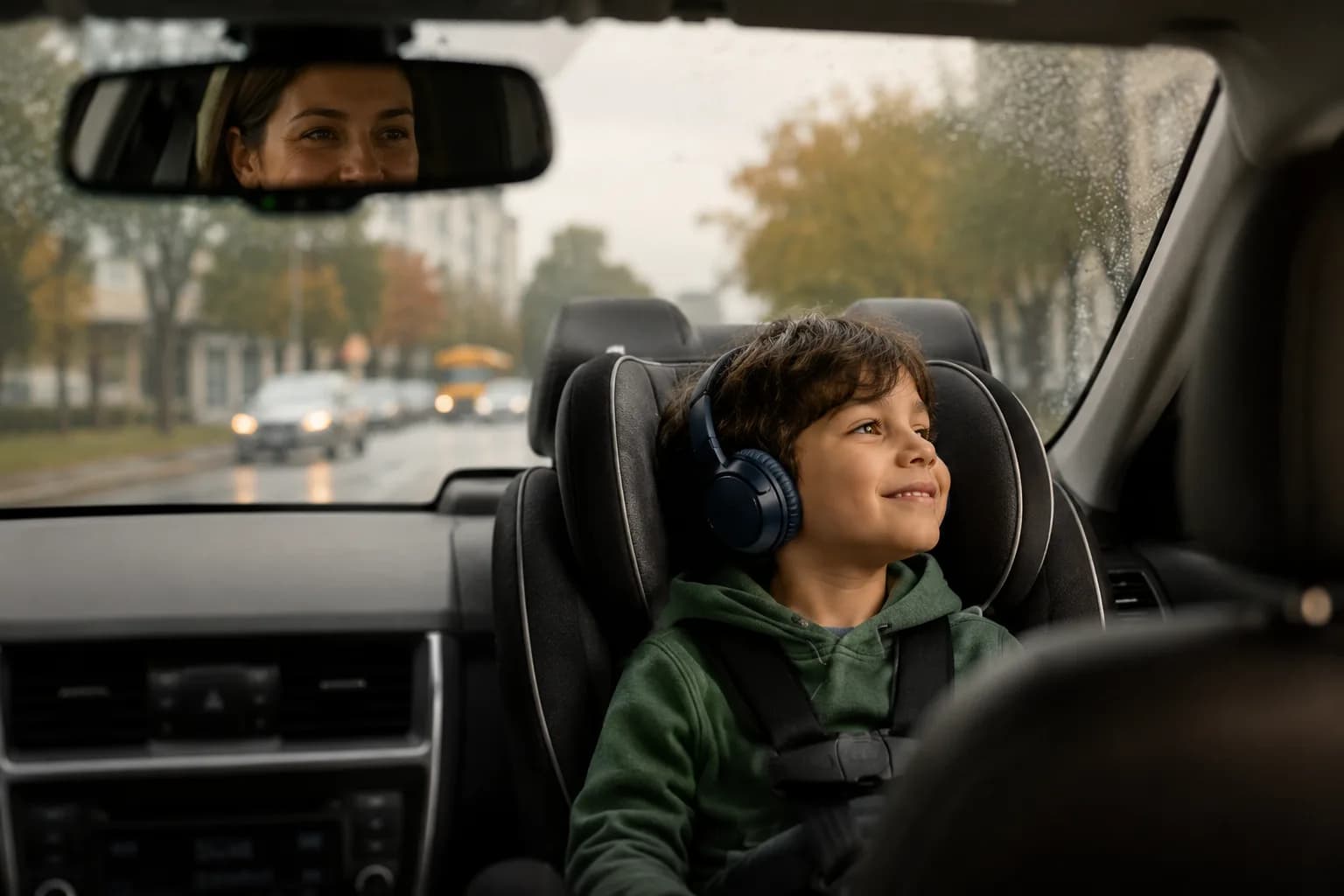
When you are too tired, stressed, or sick to model the language yourself, pass the baton. Put on a Cocoloops story during the school commute or make it the core of the bedtime wind-down. Remember what the research shows: consistency of input matters far more than who — or what — provides the voice.
Don't Punish Language Mixing
Just like Maria's student in Madrid — and just like little Louis Ronjat himself — your children will code-mix. They will borrow words from English when they can't remember the Spanish equivalent. This is not a regression; it is a sign of a flexible brain using every resource it has. Don't scold, don't panic. Just gently repeat the sentence back in the target language, casually handing them the word they were missing.
Frequently Asked Questions
What is the OPOL method?
OPOL stands for One Parent, One Language. Each parent consistently speaks a different language to the child — so the child hears, for example, only French from one parent and only English from the other. The aim is to give each language a clear, stable source rather than mixing both from both parents. The approach was first described by the linguist Maurice Grammont in 1902 and documented in detail by Jules Ronjat in 1913.
Is OPOL the same as one person, one language?
Yes. The two names describe the same approach, and "one person, one language" is arguably the more accurate of the two — the language can just as easily be anchored to a grandparent, a childminder, or a regular caregiver as to a parent. Grammont's original phrasing was une personne, une langue: one person, one language.
Does OPOL work if we live in a monolingual country?
Yes — but you have to be honest about the arithmetic. If you live in the UK and want to raise a German speaker, English will occupy the overwhelming majority of your child's waking hours, and the few you control have to be genuinely dense with German rather than merely German-flavoured. That is precisely why the interaction techniques matter more in a monolingual country than in a bilingual city: you have fewer hours to work with, so each one has to do more work.
How early should we start the OPOL method?
Day one. The earlier a child hears the distinct sounds of both languages, the more easily their brain keeps hold of them. Babies are born able to distinguish the sounds of virtually every language on earth, but that ability begins to narrow sharply toward the end of their first year if those sounds aren't part of their environment. Early, consistent exposure keeps the door wide open.
What if my child understands me but only replies in the majority language?
Keep going. This phase is incredibly common and has a name: receptive bilingualism. It means the language is genuinely taking root — your child understands it perfectly, even if they aren't yet confident enough to speak it back. Continue providing the input. The speaking comes when they are ready, sometimes years later, and often quite suddenly.
Can OPOL cause speech delays in toddlers?
No. This is a persistent myth that modern linguistics has thoroughly debunked. Bilingual children hit their language milestones on the same overall schedule as monolingual peers, and when you count the words they know across both of their languages, their total vocabulary is right in line with children learning just one. Code-mixing is a sign of a healthy, resourceful brain — not of delay or confusion.
The Bottom Line
The OPOL method has survived for over a century because its core logic is sound: children thrive on consistency, repetition, and clear boundaries. But the research adds a freeing footnote: it is the consistent exposure that does the work — not the rulebook.
Whether you are a native speaker passing down a heritage language, or a dedicated monolingual parent bravely using audio stories as your "third voice," the secret to success isn't perfection. It is simply showing up, day after day, and keeping the language alive in your home.
Need a break from being the only voice? Let our native-speaker stories do the talking for you.
Try a Cocoloops audio adventure tonight, and bring the perfect third voice into your home.
Related reading:
Tags
Related Posts
All posts
Newsletter
Get new stories & tips in your inbox
Parenting tips, audiobook picks, language learning — weekly.
