
Hindi Audio Stories for Kids Growing Up Abroad: A Practical Guide for NRI Parents
It usually happens around age four. Your child understood every word Nani said on the video call last year. Now they nod, smile — and reply in English. By six, many children of Indian families abroad can follow simple Hindi but can't hold a conversation in it. By ten, some stop understanding it altogether.
This is not a failure of parenting. It's simple arithmetic. A child growing up in Toronto, London, New Jersey, Melbourne or Dubai hears English at school, from friends, on every screen and in every shop. Hindi gets whatever is left — often a few sentences at dinner. Languages grow with exposure, and when one language gets 90% of a child's day, the other quietly shrinks.
The good news: you don't need to move back to India, hire a tutor, or turn Hindi into homework. You need more hours of enjoyable Hindi that your child actually wants to hear. Audio stories are one of the easiest ways to get there.
Why Audio Stories Work So Well for Hindi at Home
Children pick up a language by hearing lots of it in situations they understand and care about. Stories are ideal for this: there's a character to follow, a problem to solve, and the same words come back again and again.
Audio has three extra advantages for diaspora families:
- It fits into dead time. The school run, bath time, bedtime, long drives and flights are all perfect listening slots — no screen, no setup.
- It doesn't depend on your Hindi. Many NRI parents are more comfortable in English, or grew up speaking Gujarati, Punjabi, Tamil or Bengali at home. A clear, well-paced Hindi narrator gives your child a model to copy, whatever your own fluency.
- It keeps Devanagari out of the way. Reading Hindi is a separate, later skill. Listening builds the vocabulary and ear for the language first, so reading is far easier when you get there.
How Much Hindi Is "Enough"?
There's no magic number, but consistency beats intensity. Fifteen minutes every day does more than two hours once a week, because the language stays "switched on" in your child's mind.
A realistic target for most families:
| Age | Daily Hindi listening | Best time |
|---|---|---|
| 2–4 | 10–15 minutes, same story repeated for a week | Bedtime |
| 5–7 | 15–20 minutes, one new chapter a day | Car or bedtime |
| 8–12 | 20–30 minutes, longer stories and series | Commute, quiet time |
Repetition is a feature, not a bug. Young children love hearing the same story many times, and each repeat lets them catch words they missed before.
A 7-Day Hindi Listening Plan for Busy Parents
- Day 1: Play one short Hindi story at bedtime. Don't translate or quiz — just listen together.
- Day 2: Play the same story. Ask one easy question in Hindi: "Billi ka naam kya tha?" (What was the cat's name?)
- Day 3: Play it in the car. Point out one word you both heard: "Dost! Friend!"
- Day 4: Listen to the story in English first, then in Hindi. Your child now knows the plot, so the Hindi suddenly makes sense.
- Day 5: Let your child choose: Hindi or English? Praise any Hindi choice.
- Day 6: Video-call grandparents and ask your child to tell them what happened in the story.
- Day 7: Start the next chapter. Keep the routine at the same time of day.
Step 4 is the most powerful trick for children who understand English better than Hindi. Hearing the same story in both languages turns guessing into understanding.
The Best Hindi Audio Resources for Kids (Free and Paid)
Different families need different things, so here's an honest overview.
Free options
- StoryWeaver by Pratham Books — a large, free library of illustrated children's stories in Hindi and many other Indian languages, some with audio. Excellent for reading together.
- YouTube Hindi story channels — huge choice (Panchatantra, Akbar–Birbal, moral stories), but quality varies a lot, and screens and autoplay pull children towards fast cartoons rather than listening.
- Hindi kids' podcasts — a handful of family-run podcasts publish Hindi bedtime stories. Lovely when you find one your child likes, though new episodes can be irregular.
- Grandparents — still the best Hindi teachers there are. Ask them to record a story on WhatsApp once a week; children treasure these.
Paid option: Cocoloops
Cocoloops is an ad-free audio story library for children aged 2–12 in Hindi, English, Spanish, French, German and Italian. For NRI families, a few things make it different:
- Every story is in Hindi and English. All current Cocoloops stories have a Hindi version, so you can do the "English first, then Hindi" trick above with one tap.
- Proofread by native speakers. Stories are narrated with AI voices, and every chapter in every language is proofread by native-speaking teachers and language experts before it's published — so the Hindi is natural, not machine-translated.
- Gentle, values-based stories. The Zuzu the Cat series covers sharing, staying safe and friendship in short chapters of about 3–4 minutes — perfect for bedtime.
- Offline listening. The Android app lets you download stories for flights to India and long drives. (iOS is coming soon; iPhone families can listen in the browser.)
- Try it free. Every new account gets 7 days of full access, no card required.
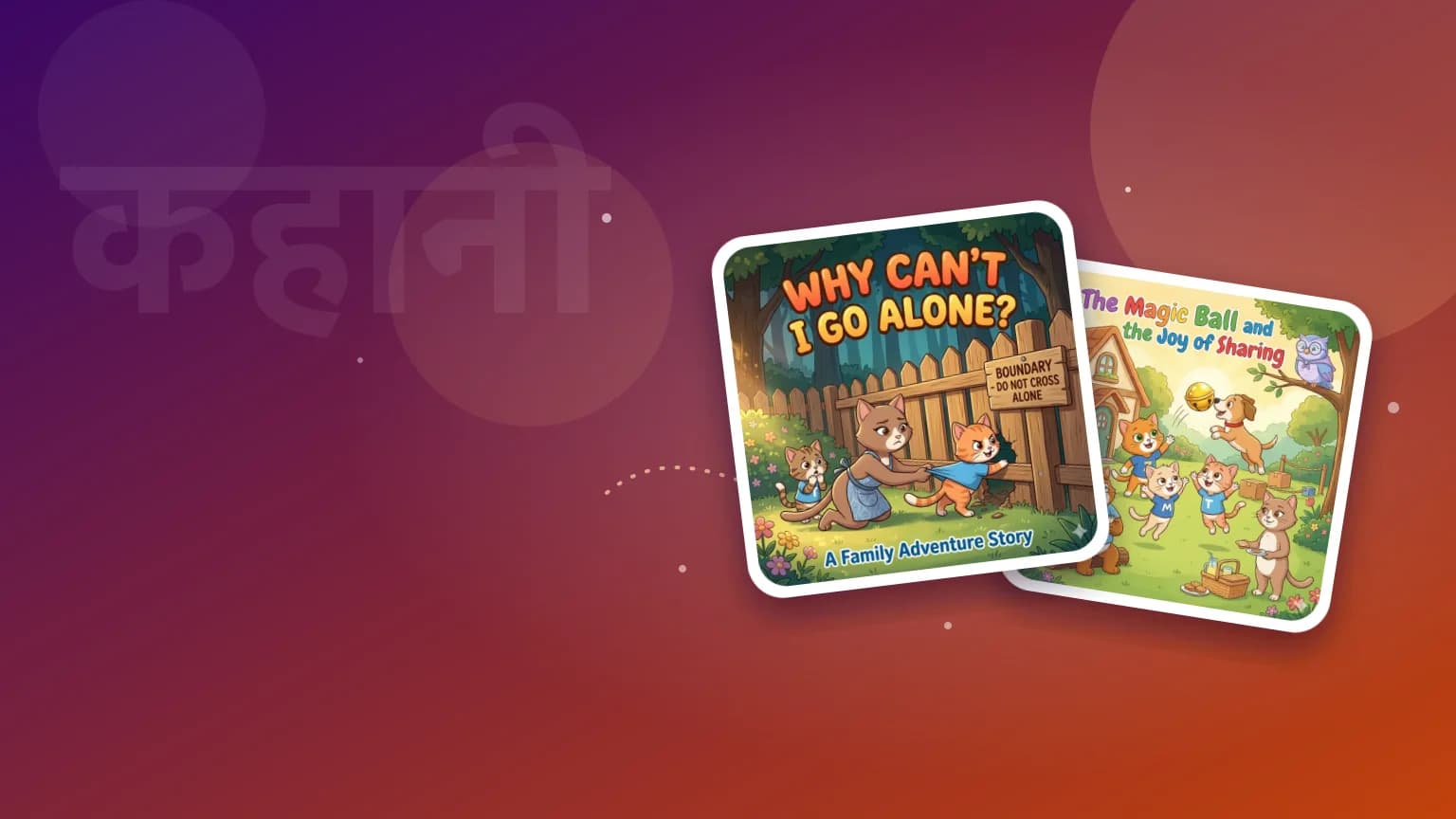
Start with Why Can't I Go Alone or The Magic Ball and the Joy of Sharing — both are about 17 minutes in total, split into five short chapters.
Common Questions From Diaspora Parents
"My partner doesn't speak Hindi. Will this confuse our child?" No. Children routinely grow up with two or three languages, and mixing them for a while is a normal stage, not confusion. Read more in Will Bilingualism Confuse My Child?
"We speak Punjabi/Gujarati/Tamil at home. Should we add Hindi too?" Many families do. Keep your home language strong first; Hindi audio can be a light extra that helps with Bollywood, travel within India and relatives from other states.
"Should I force my child to answer in Hindi?" Gently encourage, never punish. Understanding comes before speaking. A child who understands Hindi well at eight can become a confident speaker later; a child who learned to dislike it rarely does.
Keep reading: short Hindi bedtime stories with English translation
Frequently Asked Questions
What are the best Hindi audio stories for kids?
Good Hindi audio stories for kids are short (3–10 minutes), clearly narrated, and built around characters children care about. Free options include StoryWeaver by Pratham Books and Hindi story podcasts. Cocoloops offers an ad-free library where every story is available in both Hindi and English, proofread by native-speaking teachers, for children aged 2–12.
How can I teach my child Hindi if we live in the USA, UK or Canada?
Aim for 15–20 minutes of enjoyable Hindi every day rather than occasional long lessons. Bedtime and car audio stories are the easiest routine to keep. Play a story in English first and then in Hindi so your child understands the Hindi version, and involve grandparents through video calls.
At what age should children start Hindi audio stories?
From around age 2. Toddlers benefit from short, repetitive stories at bedtime, and children aged 5–12 can follow longer chapter stories. It is never too late — older children often enjoy series with recurring characters.
My child understands Hindi but only replies in English. What helps?
This is very common in diaspora families and is a sign the language is still alive. Increase enjoyable Hindi input (stories, songs, calls with grandparents), ask easy questions in Hindi, praise any Hindi answer, and avoid pressure. Speaking usually follows understanding.
Is there a Hindi story app that works offline?
Yes. The Cocoloops Android app lets you download Hindi (and English, Spanish, French, German and Italian) stories to listen offline, which is ideal for flights and road trips. An iOS app is coming soon.
How much does Cocoloops cost?
Every new account gets 7 days of free, full access with no card required. After that, one subscription unlocks the whole library in every language — see cocoloops.com/pricing for current plans.
Tags
Related Posts
All posts
Language Learning
Audible for Kids Alternatives: Cocoloops vs Audible vs Epic (and Libby for Free)
Language Learning
Cocoloops vs Yoto vs Dinolingo: Which Is Best for Kids Learning Languages Through Stories?
Language Learning
The Same Story in 6 Languages: How Multilingual Audio Stories Help Kids Learn
Newsletter
Get new stories & tips in your inbox
Parenting tips, audiobook picks, language learning — weekly.
