
The Same Story in 6 Languages: How Multilingual Audio Stories Help Kids Learn
Imagine your child already knows a story by heart: the brave little cat, the forest, the friends who come to help. Now they hear it again — but in Spanish. They don't understand every word. They don't need to. They know what happens next, so every new word arrives with its meaning already attached.
That is the idea behind parallel stories: the same story, told in two or more languages. It's one of the oldest tricks in language teaching, and it works especially well for children aged 2–12, who learn languages by understanding messages rather than memorising rules.
Why Hearing the Same Story Twice Works
Children acquire a language when they understand what they hear. Researchers often call this comprehensible input: language that is just a little beyond what the listener already knows, but made understandable by context.
A familiar story is perfect context:
- The plot does the translating. When the cat climbs the fence in English, and then el gato climbs la valla in Spanish, your child links the words without a dictionary.
- Repetition is built in. Characters' names, key phrases and story patterns return in every language and every chapter.
- It lowers anxiety. Children who feel lost in a new language often tune out. Knowing the story keeps them relaxed and listening.
- It's fair for siblings and mixed families. One child can listen in Hindi with grandparents while another listens in French for school — and they still talk about the same story at dinner.
Who Is It For?
Parallel stories suit almost every kind of family:
- Heritage-language families — hear the story in English, then in Hindi, Italian or German so the home language keeps up with the school language. (See our guide to Hindi audio stories for kids growing up abroad.)
- Monolingual parents who want their child to learn Spanish, French, German or Italian but can't speak it themselves. (How to raise a multilingual child without speaking the language yourself.)
- Bilingual and trilingual households using One Parent, One Language — each parent can play the story in their own language. (Does OPOL really work?)
- Kids learning a language at school who need extra listening practice that doesn't feel like homework.
How to Use Multilingual Stories at Home: A Simple Routine
- Start in the strongest language. Play the first chapter in the language your child understands best.
- Replay it in the target language the same day or the next morning.
- Stay with one chapter for two or three days. Repetition matters more than covering lots of content.
- Ask tiny questions, not tests. "What did the squirrel do?" is enough. Answers in any language count.
- Move the target language first after a few weeks. Once your child knows the characters, start chapters directly in the new language.
- Keep it short and daily. Ten to twenty minutes at bedtime or in the car beats an hour once a week.
Tip for toddlers (2–4): use only one or two languages, and repeat the same chapter for a whole week. For 8–12 year olds: try listening in the target language first and checking the strong language afterwards — it turns the story into a puzzle.
Where to Find the Same Story in Several Languages
Most children's audio is published in one language only, so finding true parallel versions is harder than it should be. Options include:
- Bilingual picture books — great for reading together, usually two languages per book.
- Classic fairy tales on public libraries' audio apps — you can sometimes find the same tale in different languages, though narration and length vary between versions.
- Cocoloops — built specifically around this idea.
How Cocoloops does it
Cocoloops is an ad-free audio story library for children aged 2–12 in English, Hindi, Spanish, French, German and Italian. Stories are written once and produced in several languages, so the plot, characters and chapter structure match across versions. You can switch language from the story page and keep listening.
Today:
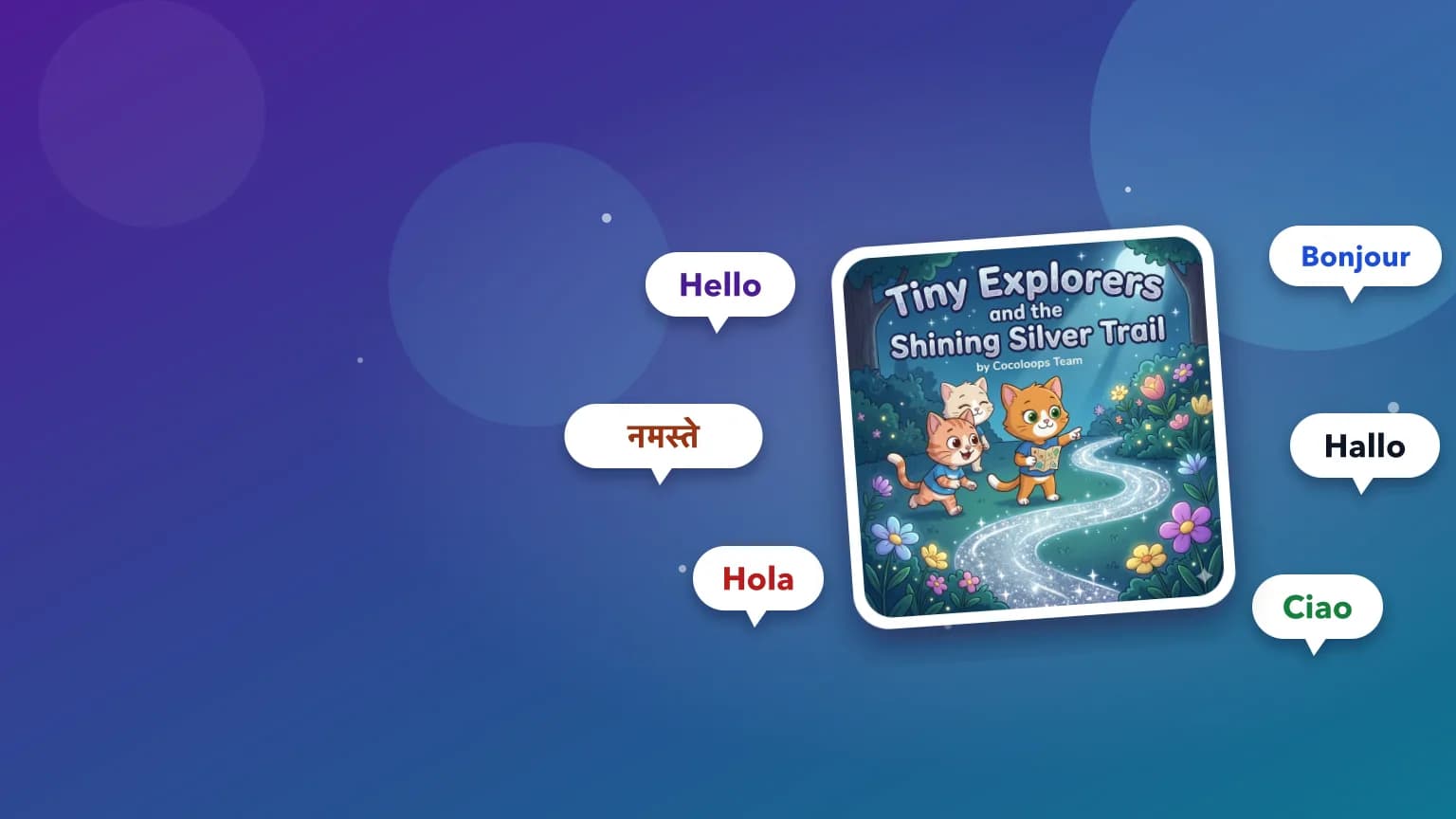
- Tiny Explorers and the Shining Silver Trail is available in all six languages — five chapters, about 11 minutes in total.
- Why Can't I Go Alone and The Magic Ball and the Joy of Sharing are available in English and Hindi, with more languages being added.
Every chapter is narrated with clear AI voices and proofread by native-speaking teachers and language experts in each language, so the Spanish sounds like Spanish and the Hindi sounds like Hindi — not like a word-for-word translation. Stories are ad-free, can be downloaded for offline listening in the Android app (iOS coming soon), and every new account gets 7 days of full access free, no card needed.
Frequently Asked Questions
Does hearing the same story in different languages help kids learn?
Yes. When children already know a story, they can understand much more of it in a new language, because the plot supplies the meaning of unfamiliar words. This kind of understandable, repeated listening is one of the most effective and low-stress ways for children to pick up a second language.
Won't switching languages confuse my child?
No. Children can keep languages apart from a young age, and temporary mixing is a normal part of bilingual development. Using the same story in each language actually makes the differences easier to notice.
Which languages are Cocoloops stories available in?
Cocoloops stories are available in English, Hindi, Spanish, French, German and Italian. Tiny Explorers and the Shining Silver Trail is available in all six; other stories are in English and Hindi, with more languages being added.
What age is best for multilingual stories?
Children from about age 2 enjoy short, repetitive stories in one or two languages. From 5 to 12, children can follow chapter stories and switch between several languages, often turning it into a game.
How long should my child listen each day?
Ten to twenty minutes a day is a great target. Daily consistency matters far more than long sessions.
Tags
Related Posts
All posts
Language Learning
Audible for Kids Alternatives: Cocoloops vs Audible vs Epic (and Libby for Free)
Language Learning
Cocoloops vs Yoto vs Dinolingo: Which Is Best for Kids Learning Languages Through Stories?
Language Learning
Hindi Audio Stories for Kids Growing Up Abroad: A Practical Guide for NRI Parents
Newsletter
Get new stories & tips in your inbox
Parenting tips, audiobook picks, language learning — weekly.
