Cocoloops vs Language Learning Apps: Why Stories Beat Flashcards
Imagine two children.
Child A spends thirty days with a brightly coloured screen. They tap a picture of a cat, match it to the Spanish word gato, earn a burst of digital confetti, and build an impressive thirty-day streak. They are engaged. Their parents are proud of the consistency.
Child B spends those same thirty days listening to an audio adventure about Zuzu The Cat — a curious, brave character navigating the world entirely in Spanish. There are no screens. No pop quizzes. No gold coins. Just a story they love, playing through a speaker.
Both children have spent the same amount of time "learning" Spanish. But only one is about to use it naturally.
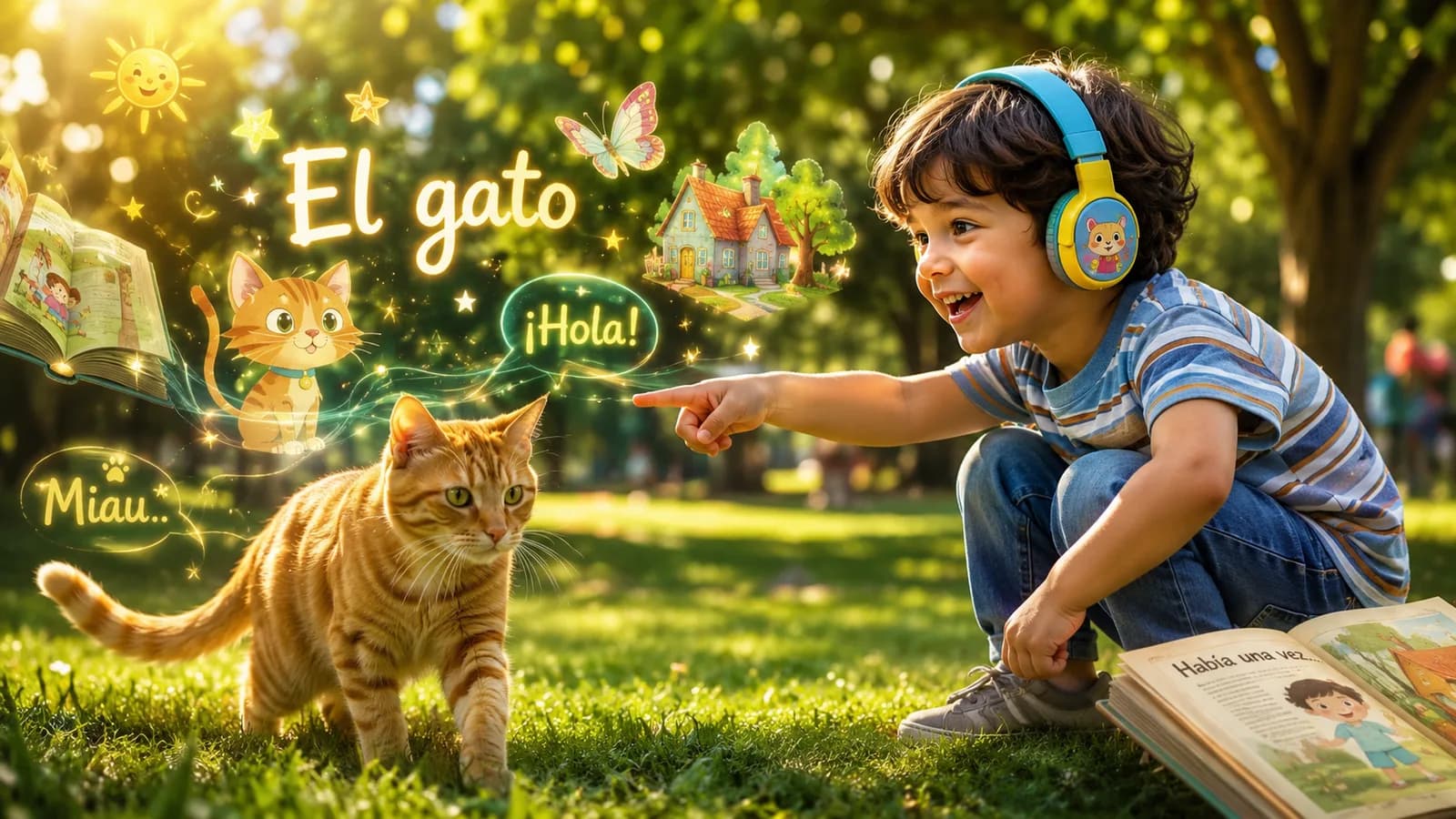
On day thirty-one, both children are at the park. A stray cat wanders by.
Child A stares in silence. Without a touchscreen to prompt them, the word gato simply does not surface. Child B immediately points and begins recounting Zuzu's adventures — in Spanish — to anyone who will listen.
This is the moment many parents notice something isn't quite working. Their child performs brilliantly inside the app—but struggles to use the same words in everyday life. Cognitive scientists call this the "Transfer Problem." The ed-tech industry has spent billions trying to close it by building better, more addictive games. But the answer is not in the code. It is in the biology of how a child's brain decides what information is worth keeping — and what to delete.
This guide breaks down every major category of language learning app for kids, what each does well, where each falls short, and why the medium of the story changes everything.
The Market Is Full of Language Apps — Here's the Problem
Search "best language learning app for kids" and you are immediately hit by a wave of options. Duolingo. Babbel Kids. Lingokids. Studycat. Rosetta Stone Kids. The app stores are crowded, the marketing is confident, and the promises are enormous.
Many of these apps are thoughtfully designed and genuinely help children build consistent learning habits. Their business model, however, naturally prioritizes daily engagement—and that isn't always the same thing as language acquisition.
To survive commercially, apps must maximise Daily Active Users — the metric that drives app store rankings, investor confidence, and advertising revenue. The most reliable way to keep any user coming back every single day is psychological gamification: streaks that feel catastrophic to break, badges that reward consistency over comprehension, leaderboards that create social pressure, and push notifications designed to trigger mild anxiety if you skip a day.
These mechanics are extraordinarily effective at habit formation. They are far less effective at language acquisition.
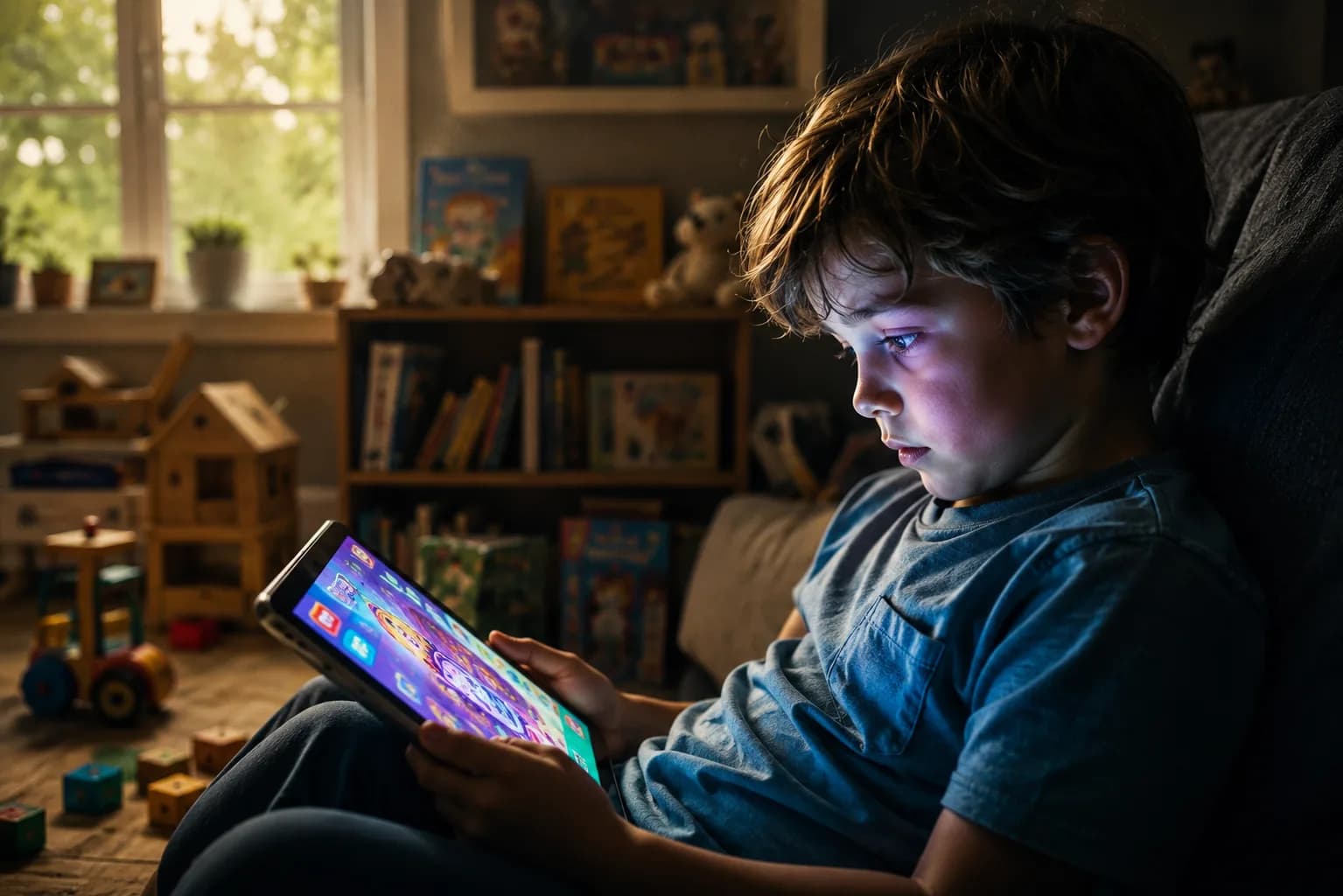
When an app is optimised for engagement metrics, it subtly trains the child to play the game — not to speak the language. The child becomes skilled at eliminating multiple-choice options, recognising visual patterns, and triggering the reward animation. They clock impressive daily times. But they are operating inside a closed system, and the language rarely escapes it into real life.
This does not mean gamified apps are worthless. It means parents need to understand what they are actually buying — and what they are not.
How Children Actually Acquire Language: What the Research Says
To make sense of any comparison between language learning tools, you first need to understand the science of how children acquire language — because it is profoundly different from how adults learn.
If you've ever wondered why children seem to learn songs effortlessly but forget flashcards, linguist Stephen Krashen spent decades studying exactly that question. Krashen's central finding was this: humans do not acquire language by studying grammar rules or drilling vocabulary. We acquire language when we receive Comprehensible Input — messages we are able to understand, even partially. Exposure to meaningful language in context is the mechanism. Everything else is supplementary.
For children under eight, this distinction is not just academic — it is neurological. Young children's brains are not developed enough to process abstract linguistic rules the way adults can. Grammar drills and isolated vocabulary matching require a kind of meta-cognitive abstraction that simply is not available to a five-year-old. Their brains are wired for something else entirely: narrative.
Research led by Dr. Michael Frank at Stanford University's psychology department found that children learn words most effectively not through repetition, but when those words are embedded in a coherent, distinctive context. It is not about how many times a child hears gato. It is about the richness of the environment in which they hear it — the character it belongs to, the scene it appears in, the emotion it carries.
When vocabulary lives inside a story, a child's brain is not trying to memorise data. It is trying to decode what happens next. The language is acquired as a byproduct of following the narrative. This is how every child learns their first language — immersed in a stream of contextualised, emotionally resonant speech — and it is how second and heritage languages are most effectively absorbed.
App Category 1: Gamified Drill Apps (Duolingo, Babbel Kids)
Not every language app works in the same way. In fact, they solve very different problems. Let's look honestly at the heavyweights.
What they do well: Gamified drill apps are masterclasses in habit formation. If you want your child to practise consistently for five minutes every single day, these apps deliver. The streak mechanics are genuinely powerful motivators. They are also effective at rote vocabulary recall — if your child needs to memorise colours, numbers, and basic nouns quickly, the repetitive flashcard structure will anchor those words into short-term memory efficiently.
Their limitations for ages 3–8: The primary structural flaw is that most gamified drill apps assume literacy. A child needs to read English to understand what the app is asking them to do in French. This immediately excludes children under six or seven from using them meaningfully.
Beyond the reading barrier, the learning is almost entirely decontextualised. Knowing that pomme means apple is not the same as knowing how to ask for an apple, describe one, or recognise the word when spoken naturally at speed by a native French speaker. The point systems reward pattern recognition over deep understanding. Children learn to play the game. The language stays on the screen.
Best used for: Ages 7 and above, as a vocabulary reinforcement supplement — not as a primary acquisition tool for young children.
App Category 2: Interactive Learning Apps (Lingokids, Studycat)
Recognising that young children cannot read, a second generation of apps emerged to fill the gap. Platforms like Lingokids and Studycat replace text-based translation with visual games, animated characters, and catchy songs designed for the preschool demographic.
What they do well: These apps are genuinely engaging for three-to-six-year-olds. The animation quality is high, the songs help anchor basic vocabulary, and children can navigate the interface independently without parental supervision. They require no reading ability, which is a meaningful advantage over drill-based platforms.
Their limitations for ages 3–8: Visual engagement and language acquisition are not the same thing. When a child is popping animated balloons or dragging a cartoon character across a screen, their brain is primarily processing the visual stimulus — not the language attached to it. The narrative depth is almost zero, which means the vocabulary remains isolated rather than contextualised. Words are learned as labels, not as living parts of a language.
These platforms also rarely offer multi-language flexibility within the same session. Switching from French to Spanish typically means starting a separate, unrelated course. There is no mechanism for the cross-language story comparison that research suggests is one of the most powerful tools for bilingual development.
Best used for: Early engagement and basic vocabulary exposure for ages 3–6, as part of a broader approach rather than a standalone solution.
App Category 3: Story-Based Audio Platforms (Cocoloops)
This brings us to a fundamentally different category — one that is not trying to build a betterFt flashcard, but to replicate the conditions under which children naturally acquire language.
Cocoloops is a multilingual audiobook platform for children aged 3 to 15. Instead of a screen to tap, children get a world to listen to. Stories like Zuzu The Cat, explorations into the physics of sound, adventures through global postal services, and journeys into the science of dreams are narrated in full by native speakers — in multiple languages.
The mechanism is straightforward and grounded in the Comprehensible Input research: a child listens to a story in English first, following the plot, investing in the characters, and understanding every detail. Two evenings later, your child presses play again. The same adventurous cat is back—but this time, she's speaking Spanish. Because the child already knows the story, their brain does not panic at the unfamiliar sounds. Instead, it uses the narrative as a bridge, mapping known plot points onto new vocabulary automatically.
There is no reading required. No screen dependency. No parent needing to speak the language. And crucially, children hear authentic prosody — the natural rhythm, intonation, and emotional texture of a living language — which no flashcard application can replicate, because prosody cannot be reduced to a multiple-choice question.
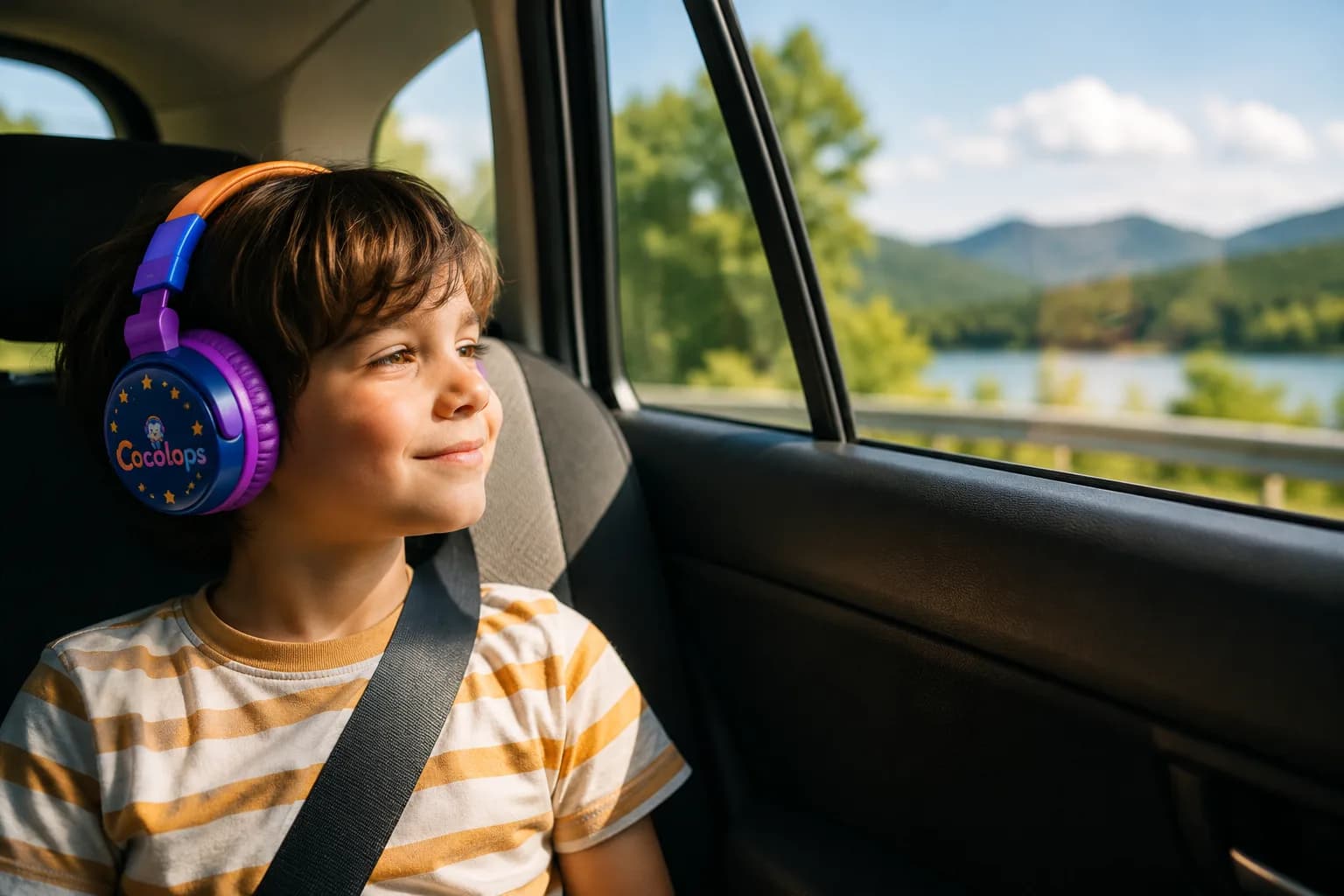
Cocoloops works offline, making it practical for car journeys, flights, and bedtime without screen light competing for a child's attention.
Side-by-Side Comparison: Language Learning Tools for Kids
| Feature | Gamified Drill Apps | Interactive Visual Apps | Cocoloops (Story Audio) |
|---|---|---|---|
| Best age range | 7+ (requires reading) | 3–6 (visual games) | 3–15 (audio comprehension) |
| Learning mechanism | Translation & repetition | Visual association | Narrative immersion |
| Screen dependency | 100% active screen time | 100% active screen time | 0% (audio only) |
| Contextual vocabulary | Low (isolated words) | Medium (simple scenes) | High (full story arcs) |
| Native prosody | Low (robotic/staccato) | Medium (songs only) | High (native voice actors) |
| Multi-language flexibility | Separate courses required | Separate courses required | Instant same-story switching |
| Parent language skills needed | None | None | None |
| Typical monthly cost | £5–12/month | £7–12/month | Free tier + subscription |
When to Use Each Tool (They Can Work Together)
This is not a call to delete every app from your phone. Used with intention, these categories can complement each other well.
Think of Cocoloops as your foundational daily habit — the fifteen minutes of native-speaker audio immersion that happens in the car, at bedtime, or during lunch. This provides the deep contextual exposure and authentic pronunciation modelling that develops real linguistic intuition.
Then use a gamified drill app occasionally — on a long flight, a rainy afternoon, or as a reward — to gamify the vocabulary your child has already absorbed through stories. The words they already know from Zuzu's adventures will recognise instantly in a Duolingo flashcard, and the positive reinforcement will reinforce them further.
The main course is immersion. The occasional treat is the game.
What Research Says About Narrative vs. Drill Learning
The academic case for narrative-based language learning is robust and consistent.
Research associated with Duke University's work on early childhood comprehension shows that children exposed to complex, engaging narratives in their early years significantly outperform peers in long-term literacy, vocabulary depth, and reading comprehension. Research consistently suggests that information embedded within meaningful narratives is remembered far more effectively than isolated facts.
Long-term studies comparing immersion-based language programmes with traditional drill instruction — including research drawing on Stanford data — show a consistent pattern: drill-based approaches produce early spikes in test scores, but immersive, contextual exposure wins across longer time horizons. By the time children reach middle school, those who acquired language through story and context consistently outpace those who relied on rote memorisation.
The reason comes down to emotion. The hippocampus — the brain's memory consolidation centre — is directly wired to the amygdala, the emotional centre. Information that arrives without emotional context is tagged by the brain as low-priority and discarded. A story about a brave cat navigating the world in Spanish triggers empathy, suspense, and delight. Emotion tells the brain that something matters—and information linked to meaningful experiences is much more likely to be remembered. Digital confetti does not.
The Bottom Line: Stories Win the Marathon
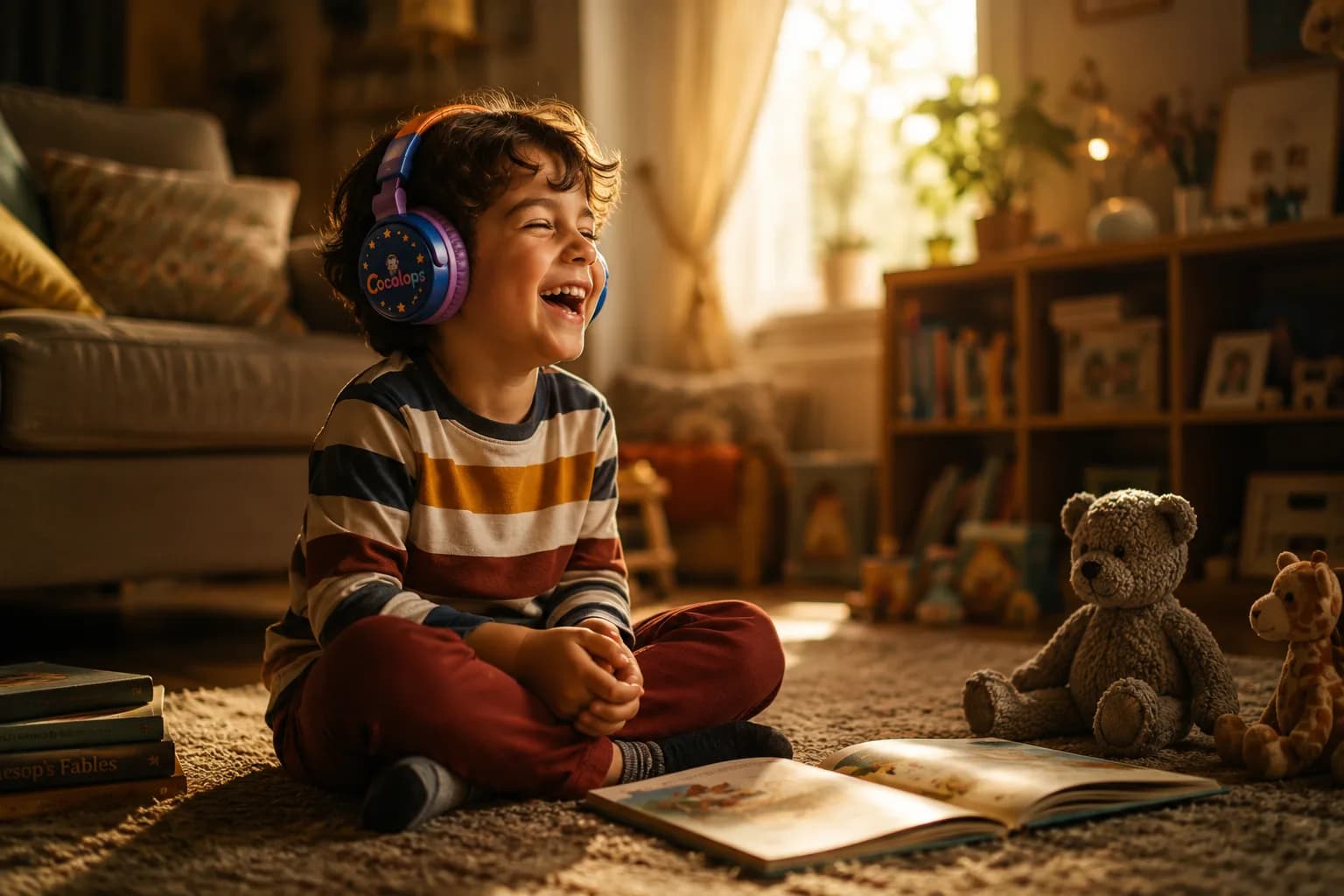
Every language learning tool for kids has a role. Gamified drill apps build habits and reinforce vocabulary. Interactive visual platforms engage young children who cannot yet read. But neither replaces the foundational mechanism of language acquisition: immersive, emotionally resonant, contextualised exposure to a living language.
Cocoloops is not a better flashcard. It is a different category entirely — the one closest to how children have always learned to speak.
Try Cocoloops as your story-based foundation. Explore the library and find the story your child cannot stop talking about. Children rarely remember the worksheet that taught them a word — they remember the story that made them love it.
Explore the Cocoloops story library →
Frequently Asked Questions
What is the best language learning app for kids?
There is no single best app for every child, because the categories do genuinely different jobs. Gamified drill apps like Duolingo are best for building a daily habit and reinforcing vocabulary a child has already met. Interactive visual apps like Lingokids suit pre-readers who need on-screen guidance. Story-based audio platforms are best for the part that matters most — comprehensible input in context, which is what actually turns vocabulary into speech. For most families the strongest setup is a story-based foundation with a drill app used as reinforcement, not the reverse.
Which language learning app is best for a 5 year old?
At five, prioritise listening over tapping. Children this age learn language through immersion and narrative rather than analytical study, and most drill apps assume a level of reading and abstract matching that a five-year-old hasn't reached. Look for rich audio, a story they care about, and native-speaker pronunciation. Screen-based apps can supplement this, but they shouldn't be the main source at this age.
Are free language learning apps for kids good enough?
Free tiers are genuinely useful for building a habit and testing whether your child engages with a language at all. Where they tend to fall short is depth of content — free tiers usually cap the amount of material available, and language acquisition depends on volume of exposure. A good approach is to start free, watch whether your child returns to it without being asked, and only pay for the tool that passes that test.
Do language learning apps actually work for children?
They work as one input among several, and they work best when they deliver comprehensible input rather than isolated word matching. The research is consistent that children acquire language through meaningful, contextual exposure — so an app that immerses a child in stories, songs, and connected speech is doing something closer to how acquisition actually happens than one built around scored flashcard drills. No app on its own replicates a language-rich environment, but the right one can supply a meaningful share of it.
Related reading:
Tags
Related Posts
All posts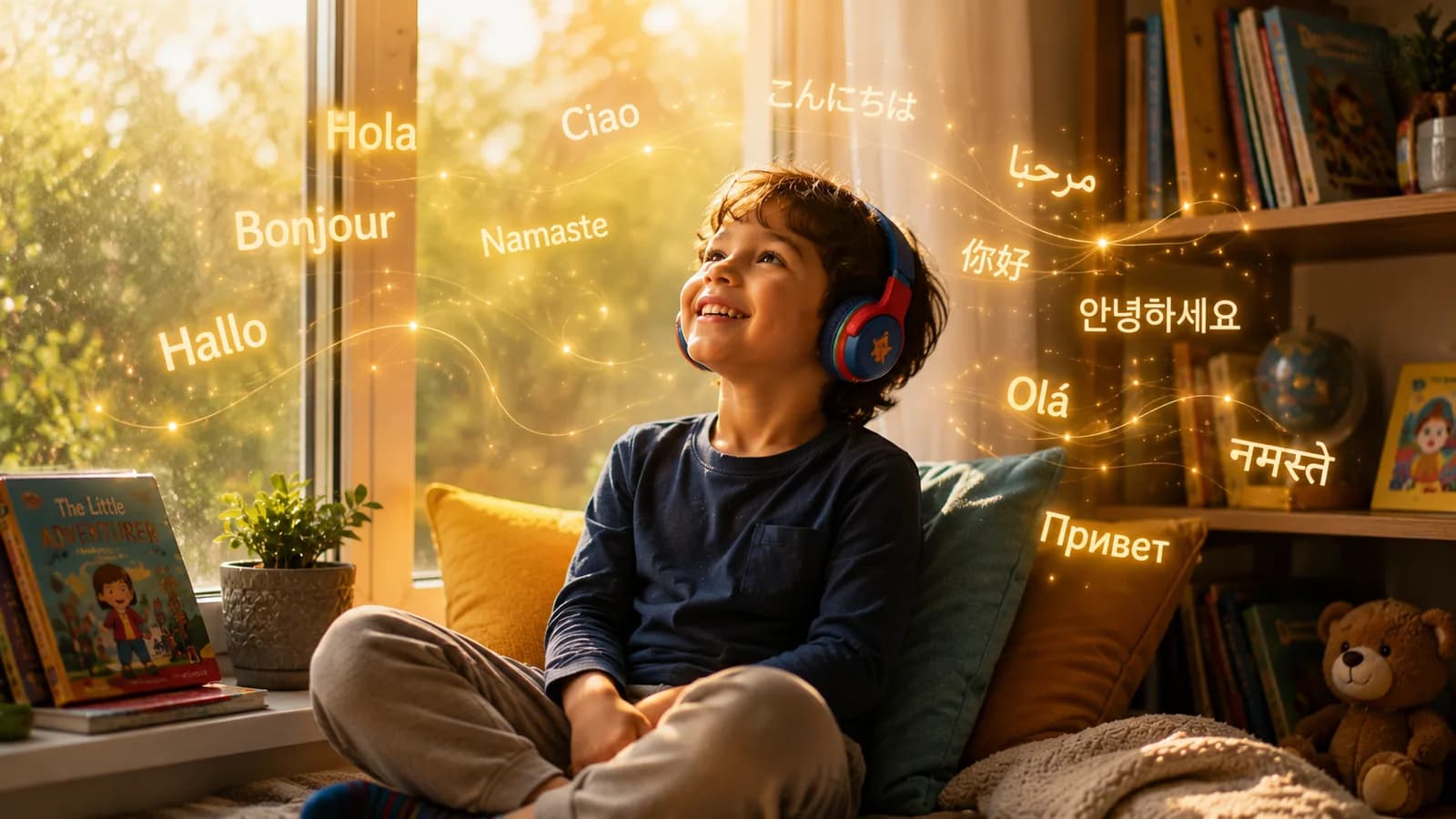
Language Learning
What Is the Best Age for Children to Learn a Second Language?

Language Learning
How Audiobooks Help Children Learn a Foreign Language Faster

Language Learning
How Stories from Other Cultures Make Children More Empathetic and Open-Minded
Newsletter
Get new stories & tips in your inbox
Parenting tips, audiobook picks, language learning — weekly.
