How Audiobooks Help Children Learn a Foreign Language Faster
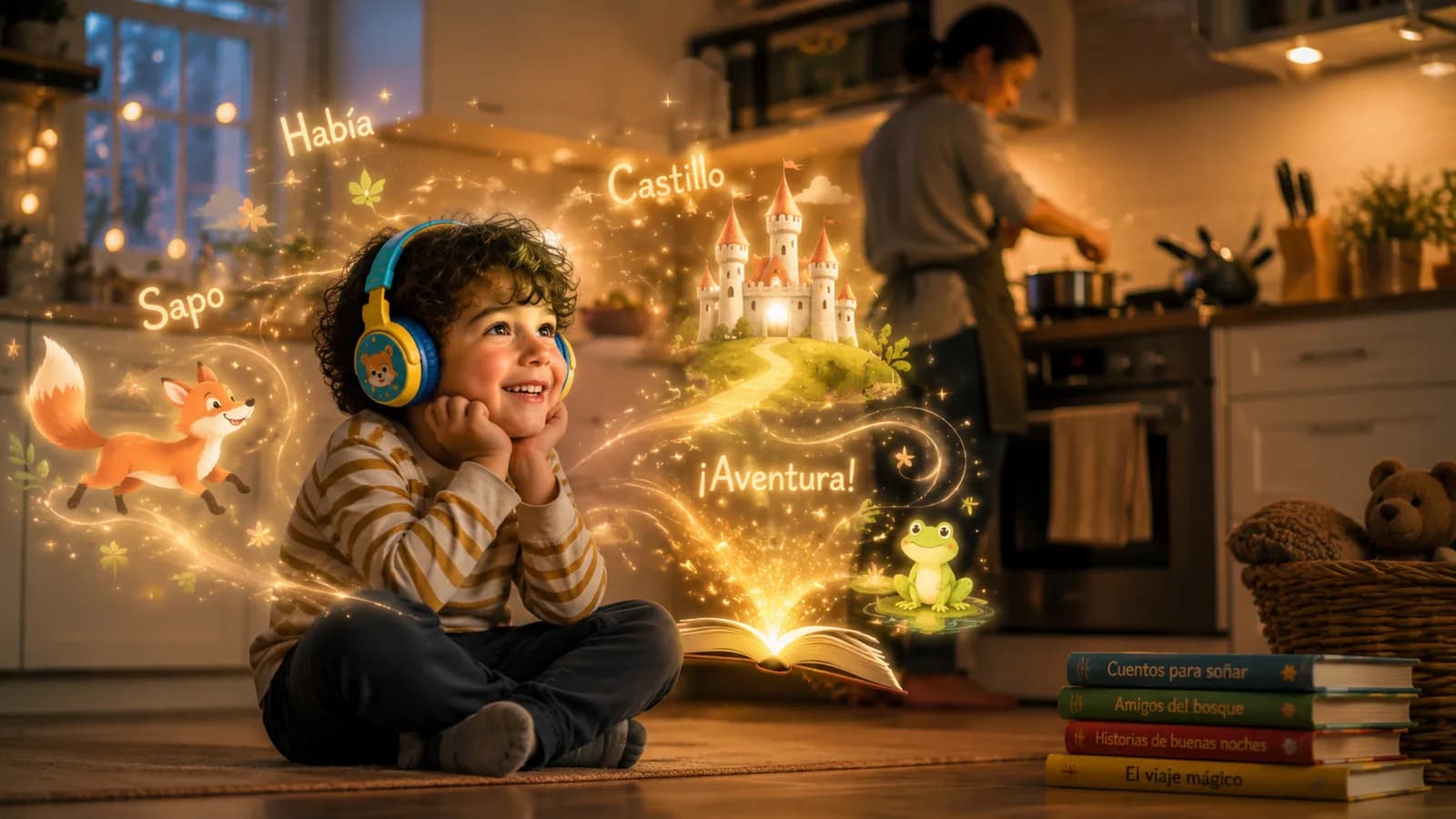
It is 5:45 on a Tuesday evening. You are trying to cook dinner, your inbox is pinging, and your four-year-old has attached themselves to your leg like a determined koala, holding a picture book and demanding you read it to them. For the fourteenth time today.
You really want your child to learn Spanish. You downloaded a language app last month with good intentions. But handing over a screen to tap digital flashcards while you cook feels wrong — and frankly, your child does not want flashcards right now. They want a story.
This is the moment most parents quietly give up on the second language goal. It feels like one chore too many.
But what if your child's insistence on being told a story is not a distraction from language learning? What if it is, in fact, the most direct route to it?
The Problem With Most Language Learning Approaches for Kids
Many children's language-learning tools of children's language learning tools on the market are built around the same flawed model: drill-based repetition. Gamified apps that reward matching a picture of an apple to the word manzana. Digital flashcards that cycle through vocabulary in isolation. Worksheets that treat language as a list of items to memorise.
The problem is not the effort behind these tools. The problem is that they work against the grain of how children's brains actually acquire language.
Children are not built to memorise isolated vocabulary. They are built for narrative. When a five-year-old is asked to match images to foreign words repeatedly, many families find enthusiasm drops once activities begin to feel like homework.
More fundamentally, decontextualised vocabulary acquisition — learning words as labels detached from any situation, character, or emotion — produces exactly a common challenge in language learning is transferring vocabulary learned in drills into real conversations. Children can ace a flashcard round and then freeze when a real Spanish speaker addresses them, because the brain stored those words as game data rather than as living language.
What children need is not a better drill. They need immersion in language that has context, emotional resonance, and narrative momentum. They need to care about what happens next — because caring is what makes the brain encode what it hears.
Why Listening Comes First: The Input Hypothesis
To understand why audiobooks for children's language learning work so much more effectively than flashcard-based alternatives, you need to understand the mechanism through which all language is acquired — first or second.
Dr. Stephen Krashen, one of the most influential linguists of the twentieth century, developed the Input Hypothesis: the principle that humans do not acquire language by producing it first. Dr. Stephen Krashen proposed that language is acquired primarily through comprehensible input, Speaking generally develops from rich language input, although interaction and feedback also play important roles in language development.
Consider how every child learns their first language. They spend the entire first year of life in a state of intense, passive listening — absorbing the rhythm, intonation, phoneme patterns, and emotional texture of the language around them — before producing a single intentional word. No one teaches a baby grammar. No one runs flashcard drills with an infant. The language is acquired through sustained immersive exposure to meaningful speech, and production emerges naturally from that foundation.
The same process governs second language acquisition. Before a child can be reasonably expected to speak Spanish, they need a significant period of listening exposure — what Krashen called the "silent period" — during which the brain is mapping sounds, building vocabulary associations, and internalising the structural patterns of the language. Audiobooks deliver this input in its most effective form: authentic, native-speaker narration wrapped in a narrative context that motivates continued listening. The child is not studying. They are following a story. The language acquisition happens as a byproduct of engagement.
What Audiobooks Provide That Other Language Tools Don't
The specific advantages of high-quality native-speaker audiobooks over app-based and screen-based alternatives are not marginal. They are structural.
Native-speaker prosody. Prosody — the natural rhythm, intonation, and emotional cadence of a spoken language — is precisely what a child's developing auditory cortex uses to map new sounds to meaning. Some apps rely heavily on synthetic or highly scripted recordings, decontextualized recordings that bear little resemblance to the way the language actually sounds when spoken by a native. A child who learns French from staccato app audio will be poorly prepared for real French speech. A child who learns from native-speaker narration will have internalised the authentic sound of the language from the beginning.
Contextualised vocabulary. When a child hears the French word for "run" during a thrilling chase scene — with atmospheric sound design, a character they care about, and a plot outcome that matters to them — their brain anchors that word to a rich web of associated meaning. It is not stored as an isolated data point. It is encoded as part of a story, an emotion, and an experience. This is why narrative vocabulary acquisition is retained, Several research suggests vocabulary learned in meaningful contexts is often remembered better than isolated word lists.
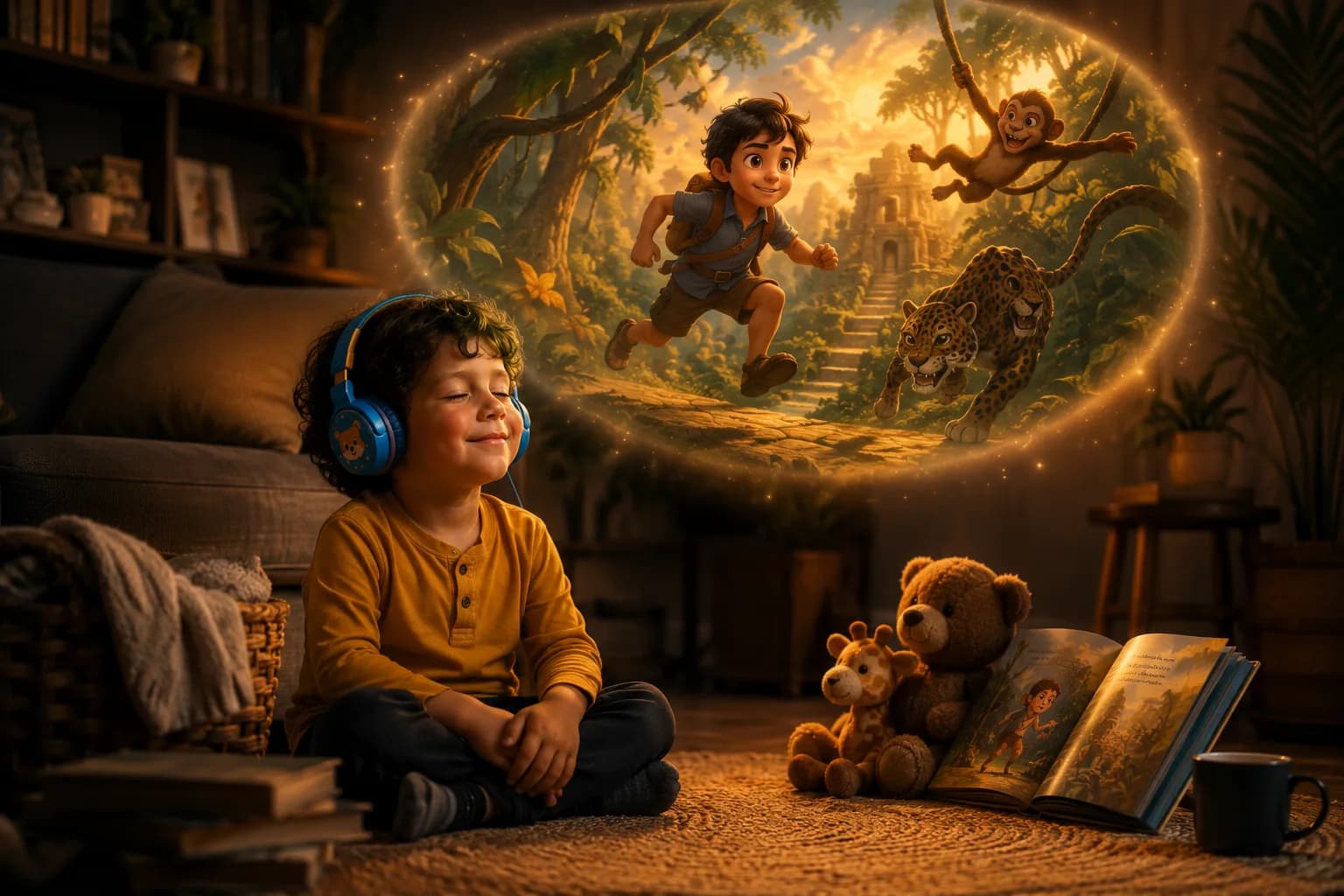
Screen-free auditory focus. Without a bright screen and flashing animations competing for attention, the child's auditory processing systems operate without competition. The brain is recruited fully into the task of listening — which, research in attention and working memory consistently shows, may support deeper listening by reducing competing visual stimuli.
No pressure to perform. The anxious monitoring of whether the child is "getting it" — the affective filter that linguists identify as one of the greatest inhibitors of language acquisition — drops completely in a pure listening context. The child is not being tested. They are being told a story. This psychological safety is not incidental to language acquisition; it is one of the conditions that make language learning feel more comfortable.
Research Spotlight: The Science of Audiobooks and Language Acquisition
The case for story-based auditory input in second language acquisition is not simply theoretical. It is supported by a growing body of empirical research.
Studies from the University of Maryland examining story-based auditory input in early childhood language development have found that children exposed to narrative audio retain vocabulary significantly longer than peers using drill-based repetition methods. The critical variable is not the number of exposures to a word — it is the richness of the context in which the word is heard. Words embedded in narrative arcs, attached to characters and emotional outcomes, are encoded more deeply and retrieved more reliably than words presented in isolation.
Research from University College London examining second language phonological acquisition in children has found that consistent exposure to native-speaker audio produces measurably more accurate accent development than exposure to non-native or synthesised audio — regardless of whether the child receives any explicit pronunciation instruction. The brain calibrates to the most consistent, authentic native model it receives, making the quality of the audio input a central variable in long-term phonological outcomes.
This body of evidence converges on a conclusion that Krashen's Input Hypothesis anticipated decades ago: comprehensible narrative audio is not one tool among many for children's language learning. It is the foundational mechanism through which language acquisition naturally occurs, and the medium that best supports it.
Age-by-Age Guide: How to Use Audiobooks for Language Learning
The way audiobooks are most effectively used shifts meaningfully as a child's brain develops. Here is a practical framework across the Cocoloops age range.
Ages 0–3: The Sound Bath. At this stage, the emphasis is on building familiarity with speech sounds and meaningful language exposure rather than expecting deliberate vocabulary learning. The infant brain is actively mapping the sound system of the languages it hears most frequently, and every exposure to authentic native-speaker audio expands the phonological range being mapped. Play short, musical, and rhythmically rich audio stories softly during daily routines — feeding, bath time, before sleep. The child does not need to understand the content. They need to hear the sounds. This is the period when the ear is being tuned.
Ages 3–6: The Repetition Phase. Children this age famously want the same story again and again — and this instinct is neurologically correct. Repetition at this stage is not tedious; it is the primary mechanism through which vocabulary and sentence patterns are reinforced into durable neural pathways. When your three-year-old asks to hear the same Cocoloops story in Spanish for the fifth consecutive evening, say yes without hesitation. Each listen deepens the encoding of every word and phrase in that story.
Ages 7–10: The Bridge Phase. At this stage, children can engage with more complex narrative structures and begin to make active cross-language comparisons. This is when the Cocoloops same-story dual-language method is particularly powerful: a child listens to a story they already know and love in English, then hears the same story in French. Their existing comprehension of the plot provides a complete cognitive scaffold for decoding the new language, allowing vocabulary acquisition to happen rapidly and with minimal anxiety. Introduce audiobooks in this phase that have increasing narrative complexity — longer story arcs, more varied vocabulary, richer character development.
Ages 10–12: Independent Immersion. Children in this bracket are capable of sustained independent listening to complex chapter-length audiobooks in the target language. At this stage, audio exposure can be supplemented by reading along with a text version of the same story — a dual-channel approach that research suggests accelerates both vocabulary depth and reading comprehension in the second language simultaneously.
5 Tips for Maximum Language Absorption from Audiobooks
-
Repeat favourites without guilt. When your child wants the same story for the tenth time, this is not a problem to manage — it is an opportunity to maximise. Each repetition strengthens the neural encoding of vocabulary and sentence patterns in that story. The language absorbed on listen ten is more deeply consolidated than the language absorbed on listen one. Say yes every time.
-
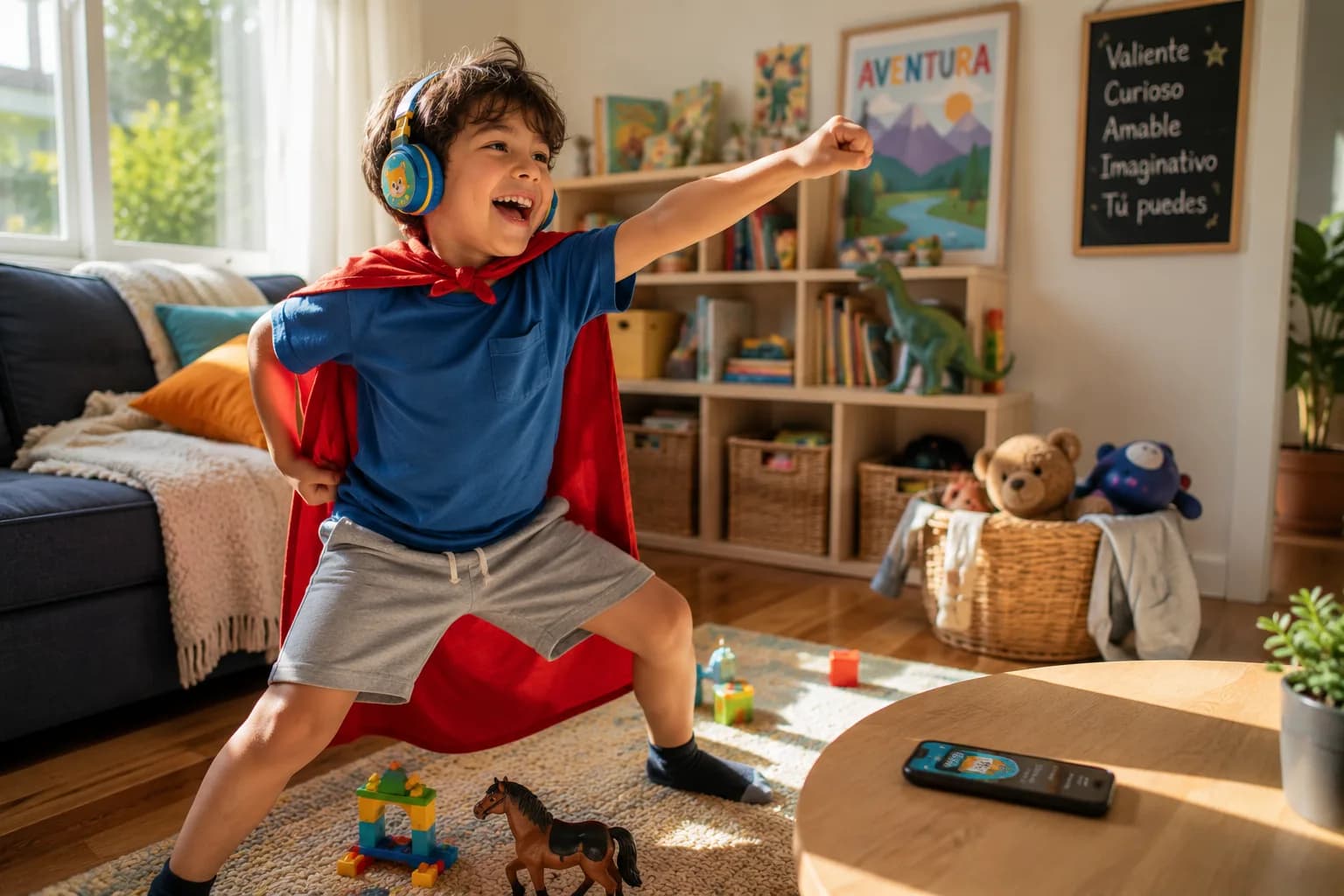
Add physical movement. Research on embodied cognition consistently shows that physical movement during learning enhances memory consolidation. Encourage your child to act out scenes, mime character actions, or simply move their body while listening. The combination of auditory and kinaesthetic input anchors vocabulary to create another meaningful association for recalling vocabulary.
-
Pause and predict. Periodically pause the audio just before a significant story moment and ask your child what they think will happen next. This keeps active engagement high across longer listening sessions, develops narrative comprehension skills that transfer to reading, and — if you encourage them to use a word they have heard in the story in their prediction — reinforces target vocabulary in a natural, low-pressure production context.
-
Use the same story in multiple languages. This is one of the most effective single techniques in children's audio language learning. Play a story in English one day and in Spanish the next. Because your child already knows the plot, the foreign language version requires no translation effort — the brain maps new words directly onto already-understood concepts. This is Krashen's comprehensible input in its most concentrated form.
-
Build a listening ritual. The most important variable in language acquisition through audiobooks is consistency. A child who hears fifteen minutes of native-speaker audio every single day will are likely to make steadier long-term progress. Anchor audiobook time to an existing daily routine — the school run, dinner preparation, bath time, bedtime — so that the habit requires no additional willpower to maintain. Within three to four weeks, the ritual becomes self-sustaining.
How Cocoloops Is Designed Around This Science
Cocoloops was built specifically because a gap existed between what the science of language acquisition says works and what the children's language learning market was offering.
Every element of the platform's design reflects the research outlined in this article. Native-speaker narration in every story delivers authentic prosody — not robotic text-to-speech, not non-native approximations, but the real intonation and rhythm of French, Spanish, German, Italian, and Hindi as spoken by native speakers of those languages.
The same-story multilingual format — Cocoloops' most distinctive feature — operationalises the comprehensible input principle directly. A child builds deep emotional engagement with a story in English, then hears that exact narrative again in their target language. The plot is the comprehension scaffold. The foreign language is what hangs from it.
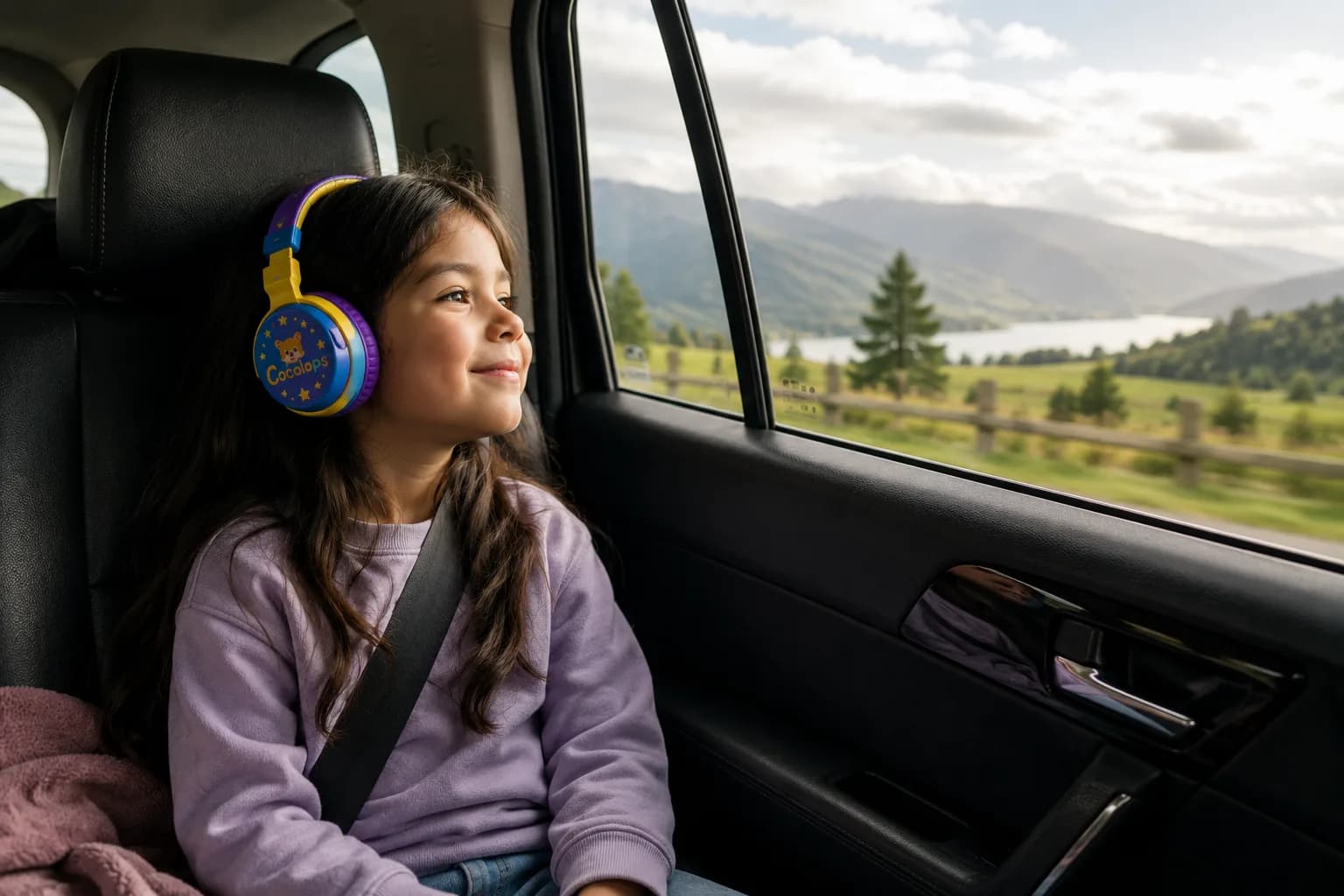
Stories are calibrated across the full three-to-fifteen age range, with vocabulary complexity, narrative length, and thematic depth growing alongside the child's cognitive development. Offline access means the listening habit is not interrupted by connectivity — making it practical for car journeys, travel, and rural locations equally.
The platform asks nothing of the parent linguistically. No fluency required, no preparation needed. You curate the listening environment. Cocoloops provides the language.
Conclusion: Put Down the Flashcards and Press Play
You do not need to turn your kitchen into a classroom, your car into a language school, or your bedtime routine into a structured lesson. The most effective thing you can do for your child's second language development is find fifteen minutes of existing daily time and fill it with a great story in a native speaker's voice.
Current research strongly supports the importance of rich, meaningful listening experiences in early language learning. Everything else — the apps, the worksheets, the gamified streaks — is supplementary at best.
Start with a story your child already loves and let the language grow from there.
Browse the Cocoloops multilingual story library →
Frequently Asked Questions
At what age should I start using audiobooks for my child's second language learning?
For most children, earlier exposure provides more opportunities to become familiar with the sounds of another language, but no age within the childhood window is too late to begin. From birth through age two, ambient native-speaker audio exposure provides phoneme mapping that shapes the brain's acoustic range before any deliberate vocabulary learning begins. From three onwards, story-based audiobooks become the primary tool for contextualised vocabulary acquisition and prosody development. Cocoloops content is calibrated from age three through fifteen, with story complexity growing alongside the child's development at every stage.
How long should my child listen to audiobooks each day for language learning?
Consistency matters more than duration. Research on language acquisition strongly supports daily short sessions over infrequent long ones — fifteen to twenty minutes of native-speaker audio every day produces significantly better long-term retention than a ninety-minute session once a week. The optimal approach is to anchor listening to an existing daily routine so that it requires no additional willpower: the school run, mealtimes, bath time, or bedtime are all proven routines that many families find effective.
Does my child need to understand everything they hear for audiobooks to help with language learning?
No — and this is one of the most important principles in the research on comprehensible input. Children do not need full comprehension for language acquisition to occur. What they need is sufficient contextual support — a story structure they can follow, characters they recognise, sound design that reinforces meaning — to allow the brain to use surrounding context to decode unfamiliar words. This is precisely why the same-story dual-language method is so effective: a child who knows the story in English can follow the Spanish version with confidence, even before they understand every word.
Can audiobooks replace other forms of language learning entirely?
For young children under seven, high-quality native-speaker audiobooks are one of the most developmentally appropriate tools available for young children, because they deliver authentic prosody, contextualised vocabulary, and comprehensible input without requiring literacy or screen time. As children grow older, supplementing audio immersion with conversational practice and some structured vocabulary work enhances outcomes further. The audiobook is the foundation — the comprehensible input base on which all other language learning builds most efficiently and durably.
My child only wants to listen in English. How do I introduce the foreign language version without resistance?
Start with the English version exclusively until your child genuinely loves the story — knows the characters, anticipates the plot twists, and asks to hear it again. Only then introduce the foreign language version, framed not as a lesson but as a new way to hear a story they already enjoy. If resistance continues, try ambient listening: play the foreign language version in the background during an activity your child already loves, without drawing attention to the language switch at all. Background exposure during low-pressure activity is still meaningful comprehensible input, even when the child is not actively attending to it.
Related reading:
Tags
Related Posts
All posts
Language Learning
What Is the Best Age for Children to Learn a Second Language?
Language Learning
Cocoloops vs Language Learning Apps: Why Stories Beat Flashcards
Language Learning
How Stories from Other Cultures Make Children More Empathetic and Open-Minded
Newsletter
Get new stories & tips in your inbox
Parenting tips, audiobook picks, language learning — weekly.
