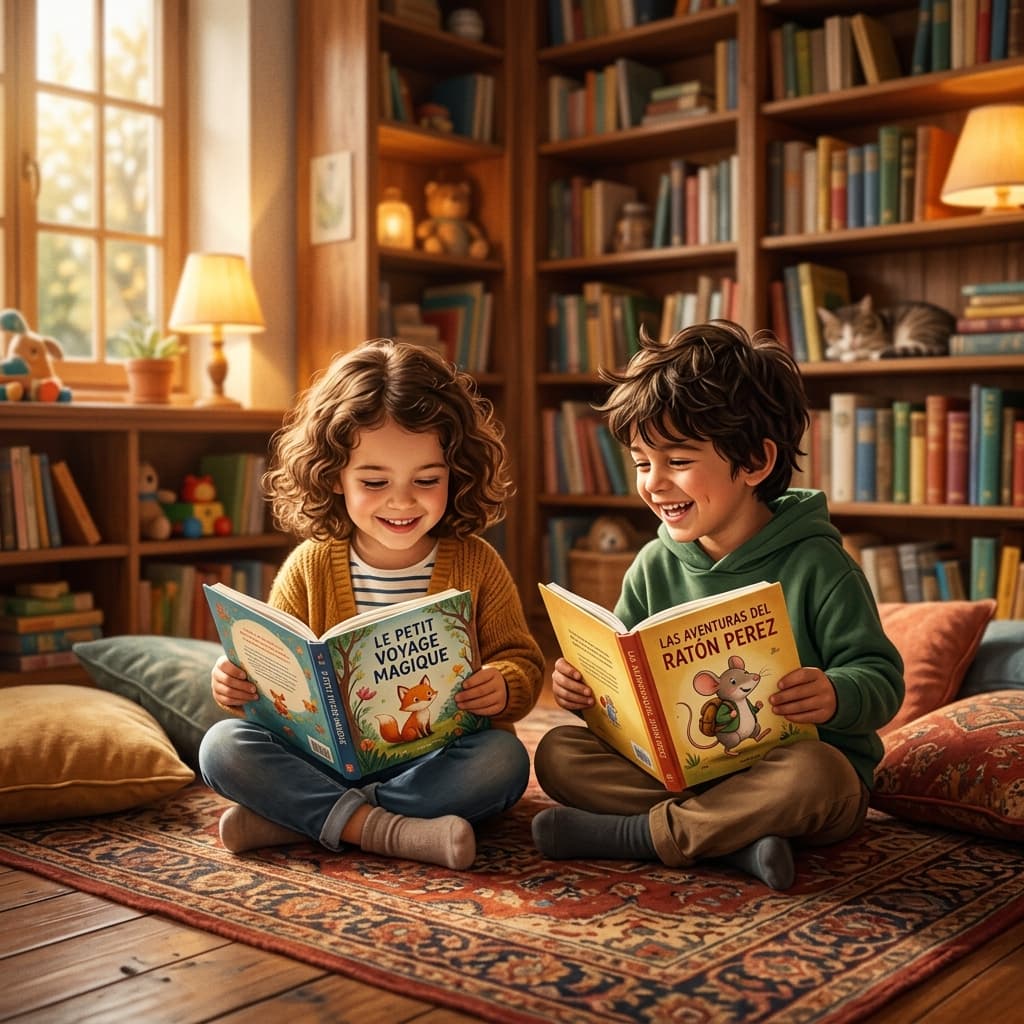
How Stories from Other Cultures Make Children More Empathetic and Open-Minded
Imagine a scene like this...Picture a pitch-black night, thirty thousand years ago.
The air is sharp and cold. The only sound is wind and the sudden crack of dry wood in a fire. Sparks drift upward, casting flickering orange light across a circle of exhausted faces. Someone begins to speak.
They do not share data. They do not recite facts. They tell a story — about a stranger from a distant tribe, a violent storm, a moment of terror survived. As the storyteller's voice rises and falls, something happens to the people listening. Their breathing slows. Their heart rates begin to synchronize. In that circle of firelight, the psychological boundary between "us" and "them" quietly dissolves.
Anthropologists who study this scene do not call it entertainment. They call it our primary survival technology. Hearing the experience of someone outside your immediate circle was the mechanism through which early humans built the cognitive bridges that kept growing societies from fracturing along tribal lines.
Stories are the world's oldest empathy machine — and they have not lost a single unit of their power.
Today, as children inherit a hyper-connected but increasingly fragmented world, multicultural stories for children are not a supplementary cultural enrichment activity. They are one of the most effective tools we have for building empathy, open-mindedness, and cross-cultural intelligence that the next generation will genuinely need. Here is the science behind how they work — and how to use them.
Why Stories Are the World's Oldest Empathy Machine
Long before language schools, flashcard apps, or classroom instruction existed, human beings built understanding across cultural divides through one mechanism: narrative. When a traveller returned from a distant territory and described what they had seen — how those people lived, what they feared, what made them laugh — listeners did not just receive information. They underwent a cognitive simulation of the experience being described.
This is not metaphor. It is neuroscience. Modern neuroscience provides growing evidence that stories can evoke many of the same emotional and cognitive processes involved in real social experiences.
Dr. Suzanne Keen, whose research on narrative empathy spans literature, psychology, and cognitive science, has documented extensively how the act of engaging with a story — particularly a first-person narrative — has been associated with increased empathic engagement in many readers and listeners. The character's emotional experience is not observed from the outside. It is temporarily inhabited from the inside. The child who listens to a story about a girl navigating her first day at school in a new country is not watching that experience — they are rehearsing it, in the most cognitively productive sense of that word.
This empathetic rehearsal is not simply a pleasant byproduct of good storytelling. It is the primary mechanism through which human beings develop the capacity to understand experiences that differ from their own. Before a child can genuinely care about people whose lives look different from theirs, they need to have practised — safely, imaginatively, repeatedly — what it feels like to be those people. Stories are how that practice happens.
The Science of Narrative Empathy
The neural basis for what Keen describes theoretically has been mapped directly by neuroscientific research, and the findings are remarkable.
Dr. Uri Hasson, Professor of Psychology and Neuroscience at Princeton University, conducted a series of landmark studies on what he called "neural coupling" — the synchronisation of brain activity between a speaker and a listener engaged in genuine communication. Placing participants in MRI machines while playing them audio stories, Hasson found that as a listener became genuinely engaged in a narrative, their brain activity began to mirror the brain activity of the storyteller. When the storyteller described a moment of panic, the listener's amygdala activated. Hasson's research found that engaged listeners often showed patterns of brain activity that became more closely aligned with those of the storyteller. When the storyteller described a beautiful landscape, the listener's visual cortex fired. The stronger the listener's comprehension and engagement, the more complete the neural synchronisation.
What this means for children listening to multicultural stories is profound. When a child listens to a story narrated by a native speaker from another culture — in which a character navigates a bustling market in a city they have never visited, or experiences a family tradition completely unlike their own — their brain is not processing the experience as external information. It is engaging neural processes associated with imagining and understanding another person's experience. The neural activity of "being" the character, however briefly and partially, is measurably present.
Dr. Hasson's research further showed that Authentic, expressive narration may increase engagement and emotional connection, both of which are associated with stronger comprehension. — the natural emotional rhythm and intonation of a native speaker — than when delivered by a synthetic or non-native voice. This finding has direct implications for why native-speaker audio narration is not just a quality preference, but a neurologically meaningful variable in the empathy-building potential of audio stories.
What Multicultural Stories Teach That Textbooks Cannot
Hand a child a textbook chapter about Japan and they will learn that the capital is Tokyo, the currency is the yen, and the population exceeds 125 million. These are facts. They are not knowledge of Japan.
Hand a child a story set in Japan and they will learn what it feels like to be nervous on the first day of school while eating a bento box packed by a grandmother. They will hear the specific humour of an elderly shopkeeper. They will feel the social weight of belonging and the warmth of a multi-generational family gathering. They will encounter Japan as a lived experience rather than a data set.
Textbooks transmit information. Stories transmit culture whole — with its emotional texture, its values conflicts, its humour, its specific ways of being afraid and being brave and being kind.
The distinction matters because it is the difference between knowing that another culture exists and understanding that the people within it have an inner life as rich, complex, and real as your own. Textbooks create otherness by categorising people into statistics and generalisations. Stories often provide emotional experiences that traditional textbooks cannot easily replicate. Multicultural stories dismantle otherness by proving — from the inside of a character's experience — that fear, joy, embarrassment, grief, and love are not culturally specific. They are human. Stories allow children to discover that shared humanity not through instruction but through experience.
5 Ways Multicultural Audiobooks Specifically Build Empathy
While illustrated books offer cultural images and written narratives offer imaginative engagement, native-speaker audio adds a dimension that neither can fully replicate: the voice itself, carrying the cultural identity of the speaker.
-
Character perspective-taking. When a child listens to a first-person audio narrative, the "I" of the story becomes their own internal voice for the duration of the listening. They are not observing a character from the outside — they are inhabiting the character's perspective from the inside. This is one of the most accessible forms of empathy rehearsal available to a young child.
-
Exposure to unfamiliar family structures and community roles. Stories normalise the full variety of how human families and communities are organised. Multi-generational households, communal child-rearing, different approaches to authority and belonging — a child who encounters these through story does not experience them as strange. They experience them as one of many valid ways for people to organise their love for each other.
-
Problem-solving across cultural contexts. A protagonist in a West African folktale may solve a problem through collective community wisdom; a protagonist in a Japanese story through patient observation; a protagonist in a Latin American story through creative improvisation. Encountering multiple cultural approaches to bravery, intelligence, and difficulty broadens the child's own repertoire of how problems can be approached. This is not just cultural knowledge — i experiences like these may contribute to cognitive flexibility..
-
Hearing another language as music rather than noise. When a child hears a foreign language spoken with the full emotional prosody of a native storyteller — the rises and falls, the warmth, the rhythm — they do not hear an alien sound system. They hear the music of human feeling expressed in a different key. This acoustic experience builds an intuitive respect that can help children become more comfortable with linguistic diversity..
-
Building curiosity rather than othering. When a child encounters cultural difference through the safe, emotionally engaging context of a story they are invested in, their cognitive default response to the unfamiliar shifts from "that's strange" to "tell me more." This shift — from othering to curiosity — is one of the most durable and practically significant outcomes of early multicultural story exposure.
Age-by-Age: Matching Stories to Empathy Development
Empathy develops progressively across childhood, and the types of multicultural stories that are most effective change as children grow.
Ages 3–5: The Mirror Stage. Young children are developmentally egocentric — the world is understood primarily through their own experience and feelings. The most effective multicultural stories at this stage are those that focus on universal emotional experiences: being afraid of the dark, missing a parent, sharing something precious, finding a new friend. The cultural setting provides context; the emotional core is the point of entry. A child in this stage does not need to understand Japanese culture to understand the feeling of being nervous on the first day of school. The shared feeling is the bridge.
Ages 6–9: The Community Stage. Children at this age are intensely aware of fairness, group belonging, and social rules. They respond powerfully to stories about community traditions, neighborhood dynamics, celebrations that bring people together, and the experience of being both inside and outside a group. Stories from this stage can begin to introduce genuine cultural specificity — particular celebrations, particular foods, particular ways of showing respect — without overwhelming with complexity.
Ages 10–12: The Complexity Stage. Pre-teens are cognitively ready for moral complexity and cultural tension. They can engage meaningfully with stories about immigration experiences, the challenge of holding two cultural identities simultaneously, historical injustices, and the kind of situations where there is no clean answer. These stories do not simplify the world — they teach children to hold its complexity without shutting down.
Cocoloops Stories and the Cultural Bridge
The connection between narrative, authentic voice, and empathy development is the philosophical foundation of the Cocoloops library.
Cocoloops stories are not English narratives translated into other languages. They are built to carry the cultural texture of the language they are told in — the specific humour, the narrative rhythms, the ways that families and communities function within different cultural contexts. Native-speaker narration preserves the natural rhythm and emotional qualities of speech, which many researchers believe supports engagement..
The multilingual same-story format adds a dimension that is unique to Cocoloops: a child who hears the same story in English and then in French is not just learning vocabulary. They are experiencing, at a felt level, that the emotional core of a story — the fear, the courage, the love, the resolution — remains completely identical regardless of the language in which it is expressed. This is not a lesson about language. It is a lesson about humanity. The insight lands not as instruction but as direct experience.
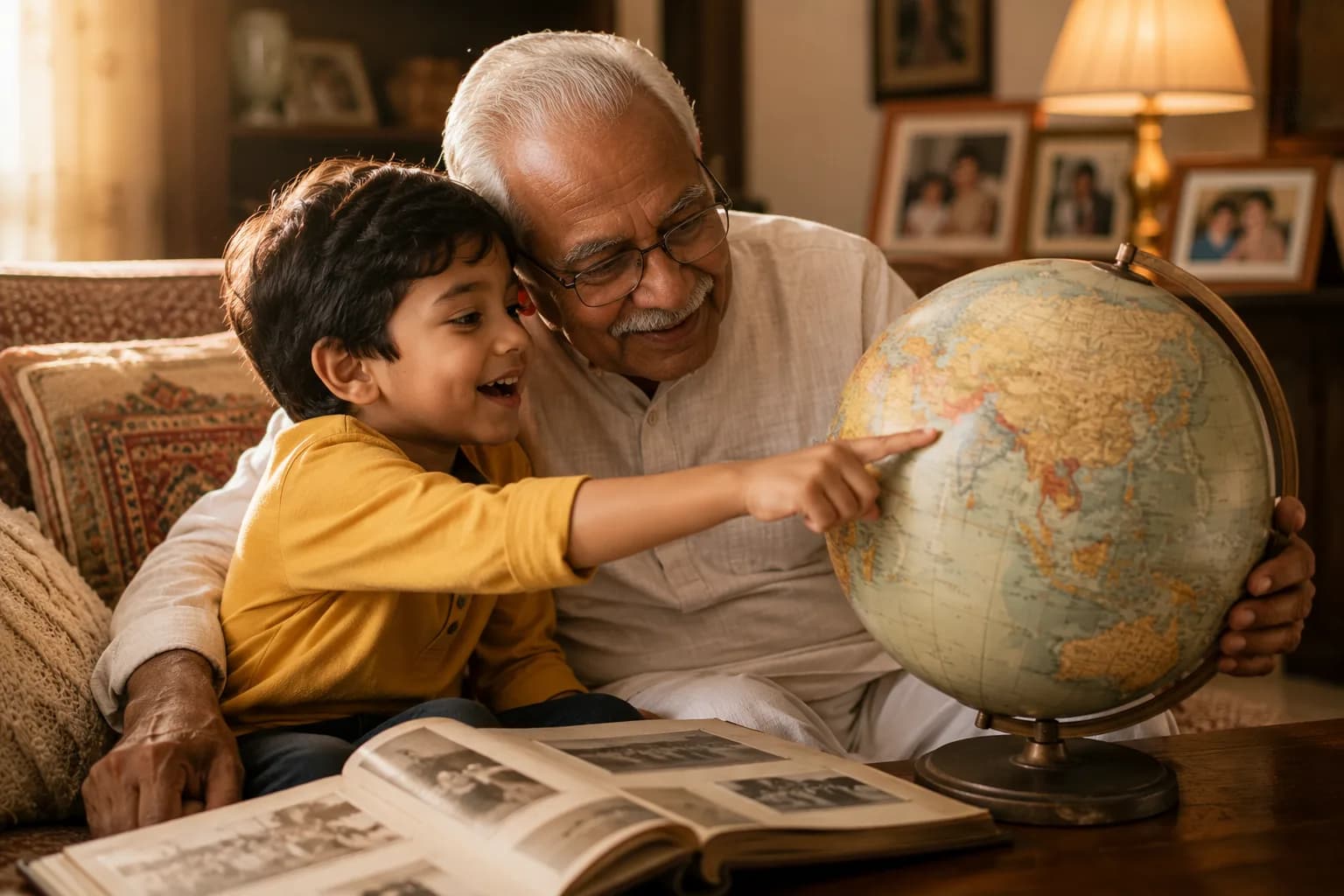
Reading List: 10 Multicultural Children's Stories Worth Exploring
Building a multicultural story library at home does not require an elaborate system. Start with these ten narratives, which between them span four continents, multiple languages, and the full range of emotional and developmental territory described in this article.
- Anansi the Spider (West Africa) — The beloved trickster spider of Akan tradition, teaching wit, consequence, and the power of cleverness over strength.
- The Boy Who Harnessed the Wind by William Kamkwamba (Malawi) — A true story of engineering ingenuity and community survival, available in picture book form for younger children.
- Lon Po Po (China) — The Chinese retelling of Little Red Riding Hood, with a distinctly different cultural approach to the tale's themes of danger and protection.
- Strega Nona by Tomie dePaola (Italy) — A warm, humorous Italian folktale about magic pasta, listening to your elders, and the consequences of taking shortcuts.
- The Name Jar by Yangsook Choi (Korea/USA) — A beautifully observed story about a Korean girl's experience of immigration and the profound question of what a name means.
- Priya Dreams of Marigolds and Masala (India) — A sensory-rich journey through an Indian grandmother's kitchen and the stories that live in food and memory.
- Why Mosquitoes Buzz in People's Ears by Verna Aardema (West Africa) — A stunningly rhythmic West African fable about cause and effect, told with language that demands to be heard rather than just read.
- A Different Pond by Bao Phi (Vietnam/USA) — A quiet, moving story about a father and son, the immigrant experience, and the particular weight of memory.
- Too Many Tamales by Gary Soto (Mexico/USA) — A warm, funny story about a Christmas cooking disaster and a Mexican-American family's traditions and love.
- The Proudest Blue by Ibtihaj Muhammad (USA/Muslim-American) — A contemporary story about identity, pride, and navigating difference with dignity and courage.
Conclusion: Open the World Before the World Demands It
We cannot shield our children from the complexity of a globalised world. But we can give them the neural architecture, the emotional vocabulary, and the fundamental human curiosity to navigate that complexity with grace.
When you give a child a story from another culture — told in its native voice, at the pace of its native rhythm — you are giving them something that no map, no flashcard, and no factual lesson can provide. You are giving them the experience of being someone else, safely and completely, for twenty minutes at a time. You are building the empathy muscle that helps shape a child grows up seeing strangers or seeing potential friends.
Explore the Cocoloops multilingual story library →
Frequently Asked Questions
At what age should I start introducing multicultural stories to my child?
From the earliest possible age — and the approach simply changes as your child develops. For children under three, multicultural stories work best as ambient native-speaker audio: the cultural content is secondary to the phonemic exposure and the emotional warmth of the storytelling voice. From ages three to five, simple stories with universal emotional themes set in other cultural contexts begin to build the mirror-stage empathy described in this article. By ages six to nine, children can engage with genuine cultural specificity in narratives. There is no age at which multicultural stories are too early — the question is only which type of cultural content is developmentally appropriate.
Do multicultural audiobooks need to be in the foreign language to build empathy, or do translated versions work?
Both build empathy through narrative, but native-language audio adds a dimension that translation alone cannot provide: the authentic prosody — the emotional rhythm, intonation, and cultural texture of the language as spoken by a native. Dr. Hasson's neural coupling research specifically found stronger brain synchronisation with authentic, emotionally expressive narration than with monotone or synthetic delivery. Hearing a story told by a native Hindi speaker, for example, conveys cultural nuance through the voice itself — the pauses, the warmth, the rhythm — that a translation into English, however excellent, loses. The ideal approach is both: narrative engagement in the child's native language, and native-speaker audio exposure in the target language.
How do I choose multicultural stories that are culturally accurate rather than stereotyping?
The most reliable indicators of cultural authenticity are the identity of the author and illustrator, the provenance of the story, and the response from communities within that culture. Stories written by authors who are members of the culture being depicted — or based on traditional narratives with documented cultural roots — are significantly more likely to reflect that culture with nuance and accuracy than stories written about a culture from the outside. Look for books that have been recommended by cultural organisations, librarians from the relevant community, or educators with relevant cultural expertise. The reading list in this article prioritises authors with direct cultural connection to the stories they tell.
My child says they find stories from other countries "boring" or "confusing." How do I build their interest?
Start with the emotional entry point rather than the cultural one. Choose stories that foreground universal experiences your child already cares about — friendship, fairness, being afraid, belonging, the relationship between children and the adults who love them — and let the cultural setting be the context rather than the subject. A child who resists "stories about Japan" will often engage fully with "a story about a girl who really wants to join the school festival but doesn't know if she's good enough" — which happens to be set in Japan. The cultural learning follows from the emotional engagement, not the other way around.
Can multicultural stories really reduce prejudice in children, or is this overstated?
The research is careful here, and honesty requires acknowledging what the evidence actually shows rather than overpromising. Narrative exposure to diverse cultural perspectives is consistently associated with increased empathy, reduced othering, and greater openness to difference in the children who receive it. However, story exposure is a foundation rather than a complete solution — it works most effectively when combined with real-world diverse relationships, modelling from adults in the child's life, and ongoing conversation about difference and belonging. Stories build the neural and emotional infrastructure for empathy. The relationships and experiences that follow build on that infrastructure. Neither substitutes for the other, but the story foundation makes everything else more possible.
Related reading:
Tags
Related Posts
All posts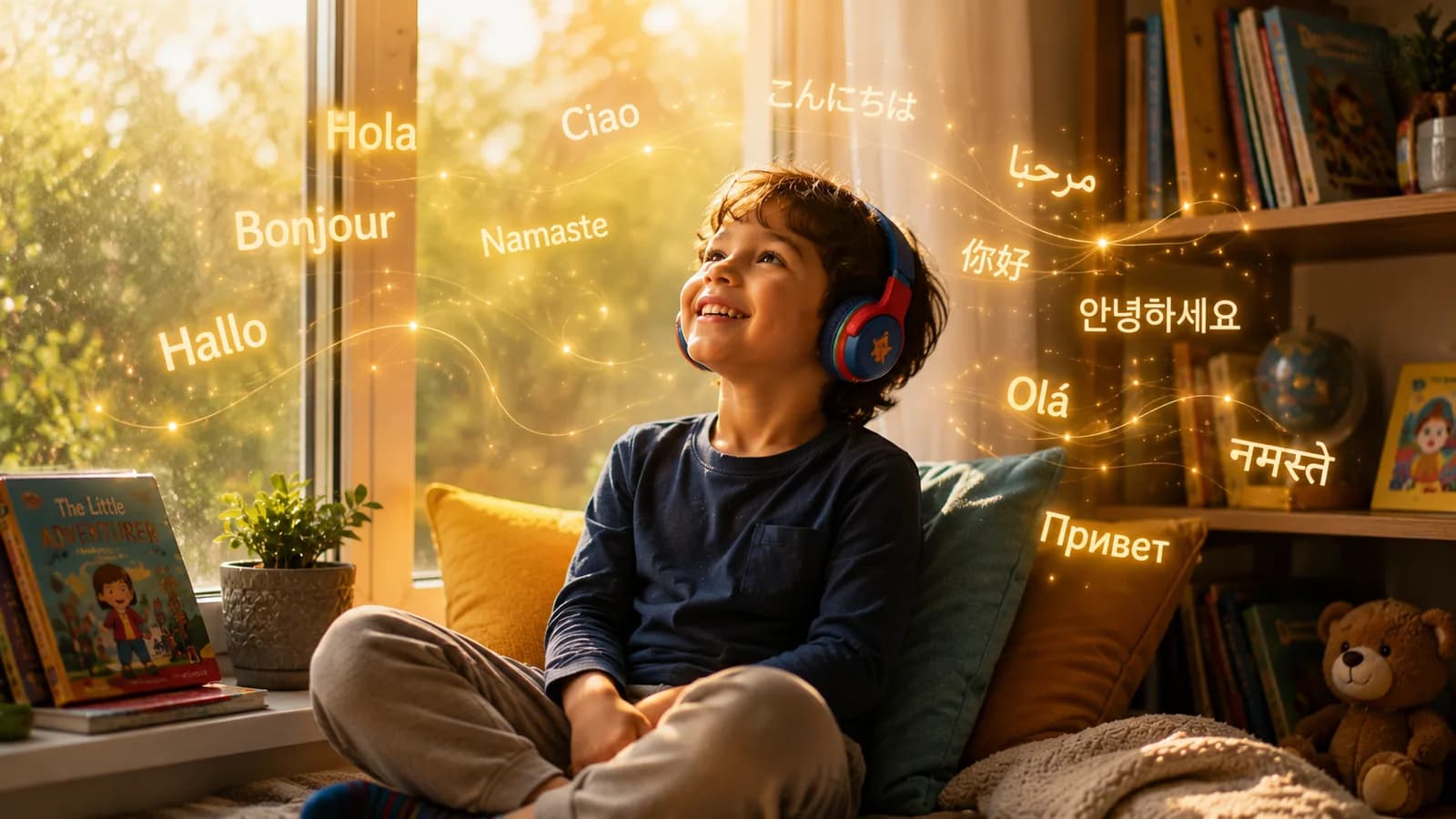
Newsletter
Get new stories & tips in your inbox
Parenting tips, audiobook picks, language learning — weekly.
