
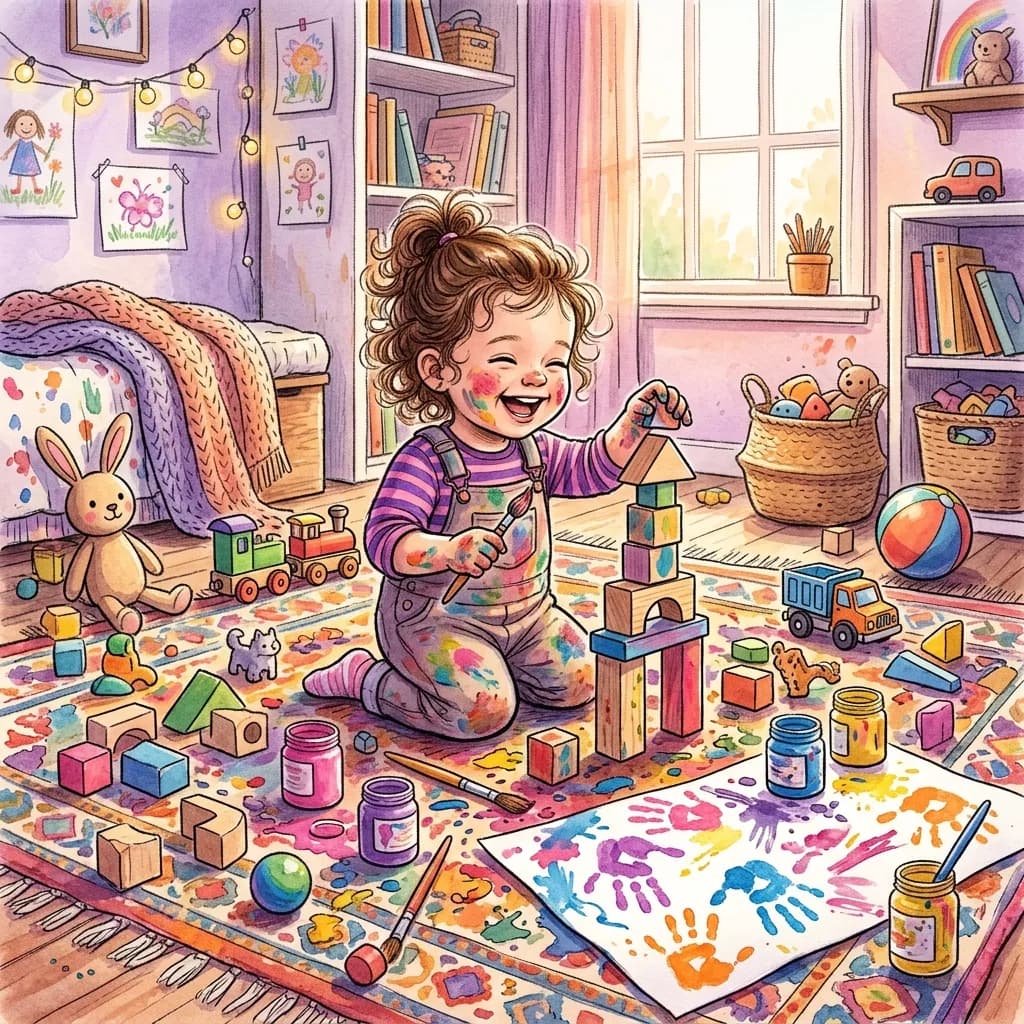
30 No-Screen Activities for 2 Year Olds and Toddlers (No Prep)
It is 5pm, dinner isn't started, and your two-year-old is pulling at your leg. The tablet is right there. This list of no-screen-time activities is for that moment, and for every other moment when you want a screen-free option that actually holds a toddler's attention.
Every idea below has been chosen for two-year-olds specifically: short attention spans, big feelings, still-developing hands, and a strong urge to put things in their mouth. Most need nothing you don't already own, and nearly all of them work for younger and older toddlers too (see how to adapt them).
How much screen time is okay at two? The WHO and the American Academy of Pediatrics both recommend no more than one hour a day of high-quality screen time for children aged two to five, ideally watched together — and less is better.
Safety first: Two-year-olds still mouth objects. Supervise every activity with small items (dried pasta, rice, beads, pom-poms), and skip anything smaller than a toilet-paper tube opening.
Zero-Prep Activities (Ready in Under 2 Minutes)
For when you need something right now.
1. Sock Matching
Dump a basket of clean socks on the floor and ask your toddler to find pairs. They won't get many right, and it doesn't matter. Sorting and matching is real early maths, and you get the laundry half done.
2. Pots and Pans Band
Hand over two pans and a wooden spoon. Yes, it's loud. Ten minutes of drumming builds rhythm, cause-and-effect understanding, and gets the wiggles out. Join in with a "fast, slow, loud, quiet" game.
3. Sticker Pages
A sheet of cheap stickers and a piece of paper keeps many two-year-olds focused for a surprisingly long time. Peeling stickers is a serious fine-motor workout for small fingers.
4. Ball in the Basket
Put a laundry basket a few steps away and hand your child soft balls, rolled-up socks, or soft toys to throw in. Move the basket further back as they get better.
5. Tape Peeling
Stick strips of masking or painter's tape loosely on a table or the floor and let your toddler peel them off. It looks too simple to work. It works.
6. Tupperware Drawer
Let them empty a low cupboard of plastic containers and lids. Fitting lids to tubs is a puzzle, a stacking toy and a drum kit all at once.
7. Find It
Hide a favourite toy somewhere easy in the room and say "Where's Teddy?" Give "warmer, colder" clues. Then swap and let them hide it — two-year-olds love being the hider.
8. Audio Stories
Put on a short audio story and let them lie on the sofa, play with blocks, or snuggle with you. There is no screen, and the child builds the pictures in their own head. Short stories of 5–15 minutes suit this age best.
Sensory Play
Two-year-olds learn through their hands. These are the activities most likely to buy you 20 minutes or more.
9. Water Play at the Sink or Tub
Stand them on a stool at the sink (or put a washing-up bowl on a towel on the floor) with cups, a funnel, a sponge and a whisk. Pouring and squeezing water is endlessly absorbing. Add a drop of bubbles for a bonus.
10. Sensory Bin
Fill a shallow box with dried oats, rice or pasta, and add scoops, cups and a few large toys to "rescue". Oats are the safest base for toddlers who still taste everything.
11. Playdough
Homemade playdough takes five minutes: 1 cup flour, ½ cup salt, 1 tablespoon oil and about ½ cup warm water, plus food colouring. Give them a rolling pin, cookie cutters and blunt plastic knives.
12. Bath Painting
Mix a little washable paint or shaving foam with food colouring and let them paint the bathtub walls before bath time. Clean-up is built in.
13. Ice Rescue
Freeze small toys in a tub of water overnight. In the morning, give your toddler warm water in a cup and a spoon to "rescue" them. This one regularly lasts half an hour.
14. Squish Bags
Put some hair gel or paint in a zip-lock bag, seal it with tape, and stick it to a table or window. Your toddler can squish and draw in it with no mess at all.
Burning Energy Indoors
For rainy days and the late-afternoon crazies.
15. Cushion Obstacle Course
Lay sofa cushions, pillows and a blanket on the floor in a path. Climb over, crawl under, jump off (low!). Change the layout and it's a new game.
16. Animal Walks
"Can you hop like a frog? Stomp like an elephant? Slither like a snake?" Take turns choosing animals. This is also great for vocabulary.
17. Freeze Dance
Play music and dance. When the music stops, everyone freezes. Two-year-olds find the freezing part hilarious, and it builds self-control.
18. Balloon Keep-Up
Tap a balloon into the air and try to stop it touching the floor. Slow-moving and easy to hit, it's perfect for this age. (Supervise closely and throw away popped balloon pieces right away.)
19. Tunnel Crawl
Open both ends of a big cardboard box, or drape a blanket over two chairs. Crawling through is exciting every single time.
20. Bubble Chase
Blow bubbles and let them chase, clap and stomp them. Works indoors on a hard floor, and is even better outside.
Quiet and Calm Activities
For before nap, after dinner, or when everyone needs to slow down.
21. Chunky Crayon Scribbling
Tape a big sheet of paper (or an opened-out cardboard box) to the floor and let them scribble. Large paper means less drawing on the table.
22. Simple Puzzles
Two-year-olds do best with 2–6 piece chunky puzzles, or inset puzzles with knobs. Success matters more than challenge at this age.
23. Threading
Threading large pasta tubes or wooden beads onto a shoelace builds hand-eye coordination. Tie a big knot at one end and wrap tape around the other to make a needle.
24. Picture Book Hunt
Open a busy picture book and ask, "Can you find the dog? Where's something red?" This turns any book into a game and builds language fast.
25. Listening Walk at the Window
Sit at a window together and name every sound you hear: a car, a bird, a door, the wind. It's calming and surprisingly good for attention.
Pretend Play and Language
Around two, pretend play explodes. Join in — your words are their vocabulary.
26. Teddy Bear Picnic
Lay a tea towel on the floor, set out plastic cups and plates, and invite the soft toys. Feeding teddy, "pouring tea" and saying "thank you" are practising real social skills.
27. Cardboard Box Car
A big box becomes a car, a boat or a rocket. Draw on a steering wheel and go for a "drive" around the living room, naming everything you pass.
28. Real Chores
Two-year-olds love doing what you do. Give them a damp cloth to wipe the table, a small brush to sweep, or let them put spoons in the drawer. It's slower than doing it yourself, and it builds confidence.
29. Puppet Chat
Put a sock on your hand and let the "puppet" ask questions: "What did you eat today? What's your favourite animal?" Shy talkers often answer a puppet more readily than a grown-up.
30. Singing and Action Rhymes
"Wheels on the Bus", "Head, Shoulders, Knees and Toes", "Twinkle Twinkle" — action songs are language lessons in disguise, and two-year-olds want them on repeat.
Screen-Free Activities for 1 Year Olds and 3 Year Olds
Most of these screen-free toddler activities stretch across the whole toddler range with small changes.
For 1 year olds: stick to the simplest, most physical ideas: the Tupperware drawer (6), pots and pans band (2), water play (9), ball in the basket (4), bubble chase (20) and action rhymes (30). Skip anything with small pieces, and expect five minutes rather than fifteen.
For 3 year olds: add a challenge. Ask for sock pairs by colour (1), hide objects in harder spots for Find It (7), let them build the obstacle course themselves (15), and turn the teddy bear picnic (26) into a whole pretend café. Three-year-olds can also follow a full audio story from start to finish, so longer stories work well at quiet time.
Screen-Free Ideas for the Hardest Moments
While You're Cooking Dinner
Set your toddler up close by with a "kitchen job": washing plastic cups in a bowl of water, tearing lettuce, or stirring a pot of dry pasta. Or put on a 10–15 minute audio story they can listen to while playing on the kitchen floor. This is the slot where most parents reach for a screen, so it's worth having a plan.
In the Car or at a Restaurant
Pack a small "busy bag": a sticker sheet, a mini notebook and chunky crayon, two small board books and a favourite small toy. In the car, audio stories and songs make long journeys calmer without a tablet.
At Bedtime
Swap the bedtime cartoon for a short audio story or a picture book. Screens before bed can make it harder for young children to fall asleep, while a calm story signals that the day is ending.
A Simple Screen-Free Day Rhythm for a 2 Year Old
You don't need to fill every minute. A rough rhythm helps:
- Morning: one active game (obstacle course, dancing) and outdoor time
- Before nap: a quiet activity (puzzle, books, scribbling)
- Afternoon: one sensory activity (water play, playdough)
- Pre-dinner: a kitchen job or an audio story
- Bedtime: bath, a story, songs, sleep
Rotate toys rather than buying new ones. Keep two-thirds of the toys out of sight and swap every week or two — old toys will feel new again.
Audio Stories: The Easiest Screen-Free Win
Audio stories are one of the few screen-free activities that work when you are busy or tired. Your child listens, imagines, and picks up new words, while you cook, drive or rest.
Good audio stories for two-year-olds are:
- Short — 5 to 15 minutes
- Gently paced — a calm voice, simple words, repetition
- Safe and ad-free — no surprise adverts or autoplay rabbit holes
On Cocoloops, stories like Zuzu the Cat are made for young children and are available in English, Hindi, Spanish, French, German and Italian. Every new account gets a full week of free access to the whole library — no card needed.
Start your free week of audio stories →
Frequently Asked Questions
What are the best screen-free activities for 2 year olds?
At two, the best activities are sensory and open-ended rather than goal-oriented: water play, sensory bins, playdough, cushion obstacle courses, sticker pages and pretend play. There is no wrong way to do them, so toddlers can't fail. Save puzzles with many pieces and multi-step crafts for age three and up.
What can I do with my 2 year old instead of screen time?
Pick something from each group: one zero-prep activity for emergencies (sock matching, pots and pans, stickers), one sensory activity (water play or playdough), and one calm activity (books or an audio story). Having a ready list removes the decision fatigue that makes screens tempting.
How do I keep a 2 year old busy while I cook?
Give them a real "job" near you — washing plastic cups, stirring dry pasta, tearing lettuce — or put on a short audio story they can listen to while playing on the kitchen floor. Keep a box of special toys that only comes out at dinner-prep time so it stays exciting.
How much screen time is okay for a 2 year old?
The WHO and the American Academy of Pediatrics recommend no more than one hour a day of high-quality programming for children aged two to five, ideally watched with a parent, and say less is better. Treat it as a ceiling, not a target.
Are audiobooks considered screen time?
No. Audio-only content doesn't involve a screen, and it works the imagination in the opposite direction — the child has to build the pictures themselves. That's why audio stories fill the gaps screens usually fill: car journeys, meals, and the late-afternoon stretch.
How long can a 2 year old focus on one activity?
A common rule of thumb is two to five minutes per year of age, so roughly 4–10 minutes for a two-year-old, and longer when they're absorbed in something they love, like water or sensory play. Short attention spans are normal — rotate activities rather than pushing one.
The best screen-free activity is the one that actually works for your child today. Aim for connection, not perfection.
Related reading:
Tags
Related Posts
All posts
Language Learning
Audible for Kids Alternatives: Cocoloops vs Audible vs Epic (and Libby for Free)
Parenting Tips
Bedtime Stories for 2 Year Olds: 5 Very Short Stories to Read Tonight
Parenting Tips
Bedtime Stories for 3 Year Olds: 5 Short Stories to Read Tonight
Newsletter
Get new stories & tips in your inbox
Parenting tips, audiobook picks, language learning — weekly.
